Graduate textile design projects from the Lucerne School of Design, Film and Art put emotional wellbeing, social connection and sustainability at the center of their 2026 work. Featured in a Dezeen School Show, the Bachelor in Textile Design collection ranges from plant-dyed objects meant to slow you down to a flax-based fabric engineered for car interiors.
Textiles designed for feeling, not just function
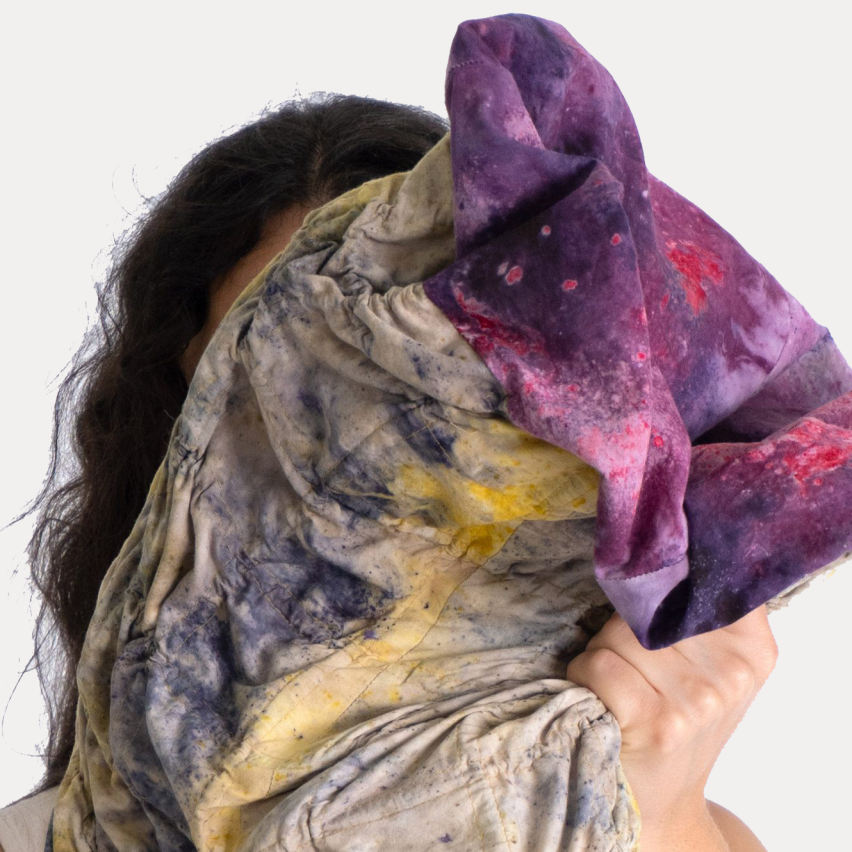
Two projects lean directly into emotional health, treating fabric as a tool for self-awareness rather than decoration. Nina Ronja Bundi's Fingerspitzengefuhl uses natural fibres and only plant-based dyes to create objects that invite users to pause and feel rather than analyze emotions. A carpet forms a "room within a room" for emotional awareness, while a shapeable object lets people express how their body feels without words. The work ties to the UN's Sustainable Development Goal 3 on health and wellbeing, anchoring the personal in a broader agenda.
Alva Tosca Jeker's Weaving Conversations treats textile-making itself as a social practice, gathering people to weave together without prior skill or a fixed goal. Individual threads become a symbol of collective structures, building a growing archive that visualizes community as a continuously woven fabric. The result reframes craft as something done with others rather than alone. You can find more student showcases like this in our reviews and showcases.
Material experiments and sustainable fabric
Other students pushed structure, surface and reuse, exploring how textiles can be transformed or given a second life:
- EntFalten by Anja Russli: knitted textiles permanently transformed into three-dimensional forms through pleating, with colour applied to reinforce the folds.
- Un Cocon Pour La Soie by Chloe Maitre: a study of silk that reflects, transforms and materializes light through its structure, arguing for slower, more attentive making.
- Precious Fragments by Sarahi Singh: a haute-couture research collection that pairs artisanal craft with discarded, unconventional materials.
Sustainability is most explicit in Bettina Buser's Weavings in Motion, a linen fabric collection developed with industry partner Bcomp for composite components in car interiors. The high durability and lightweight nature of flax fibre, the project argues, make linen an ideal alternative to the fossil-based materials used until now, a practical bridge between craft research and industrial application.
Reinterpreting Swiss tradition through textiles
Several pieces reframe heritage, using textile and costume to question rather than simply preserve tradition. Joya Gisele Blarer's Collective Womb reworks female figures from Swiss legends through costume and film as a feminist counter-narrative, while Myra Theresa Hauser's Everchanging Matter repurposes worn or unwanted folk costumes into new outfits that shift between tradition, body and change.
Across the collection, the school positions textile designers as hands-on experts reshaping both materials and meaning in a changing world, applying traditional craft alongside digital tools to make a tangible impact. The throughline is clear: whether the goal is emotional awareness, community, sustainability or cultural critique, these graduates treat cloth as a medium for ideas as much as for objects. For more on design and emerging makers, browse our latest design news.
Frequently asked questions
What is the focus of the Lucerne textile design projects?
The 2026 Bachelor in Textile Design collection centers on emotional wellbeing, social connection and sustainability, with projects ranging from plant-dyed objects to a flax-based fabric for car interiors.
Which project is the most sustainability-focused?
Bettina Buser's Weavings in Motion, a linen fabric collection developed with Bcomp for composite parts in car interiors, makes the strongest sustainability case, presenting flax fibre as a durable, lightweight alternative to fossil-based materials.
How do the projects address emotional wellbeing?
Nina Ronja Bundi's Fingerspitzengefuhl uses natural fibres and plant-based dyes to create objects that help users feel emotions rather than analyze them, while Alva Tosca Jeker's Weaving Conversations uses group weaving to build social connection.