Bookmaxxing is the tongue-in-cheek interior design trend of showcasing books as a decorative feature, and this roundup gathers eight homes that do it beautifully, from a penthouse in Germany to the Rome apartment of Radiohead singer Thom Yorke. Beyond signalling a love of reading, filling a space with books adds warmth, an inviting feel, and a welcome flash of color to otherwise monochrome rooms, as seen in examples ranging from Spain to Japan.
The appeal of bookmaxxing is partly practical and partly emotional. A wall of spines breaks up flat planes, softens hard materials like concrete and steel, and gives a room a lived-in character that styling props rarely achieve. Across these eight interiors, designers treat books less as clutter to hide and more as a finish in their own right.
Historic homes reimagined with books
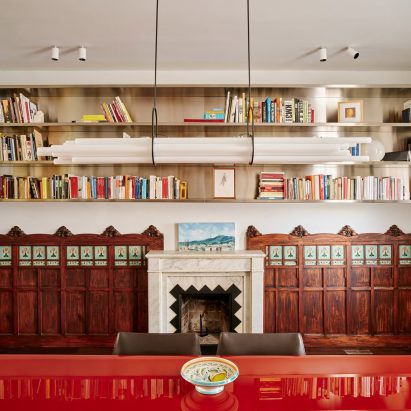
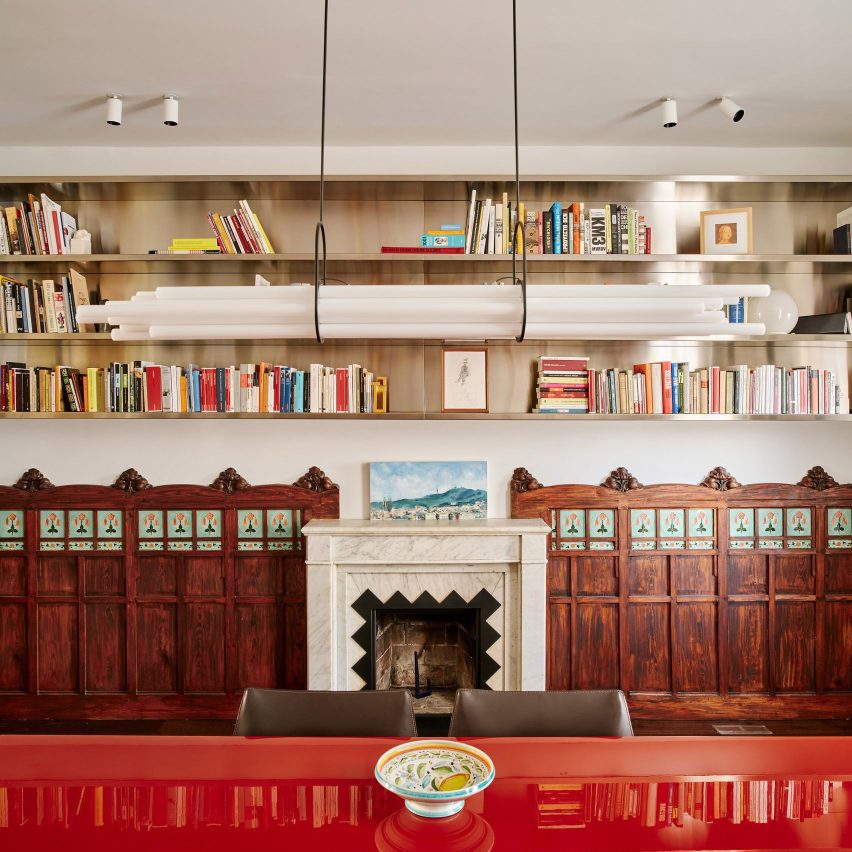
- Sailor's House, Spain, by Raul Sanchez: A property in Mataro, first combined from two separate homes by sailor Antoni Cuyas in 1865 and now lived in by his descendant, pairs ornate wooden panels with stainless-steel bookshelves and a glossy red table by Italian architect Carlo Scarpa.
- Athens penthouse, Greece, by Local Local: A historic townhouse overhauled with materials and patterns that nod to the Plaka neighbourhood; in its all-white living room, architectural sconces and a classic fireplace are joined by shelves of books that inject a joyful touch of color.
- Heion House, UK, by Studio Hagen Hall: Japanese and modernist influences shape an oak-lined interior for residents who had previously lived in Japan, including a book-lined nook with a small workspace and a wooden stool.
Modern spaces built around shelves
- Frankfurt penthouse, Germany, by Holzrausch: Open-plan living spaces lead to a roof terrace, and a wooden bookshelf beside it keeps reading material close in what the owners wanted to feel like a roof garden in the middle of the city.
- Farleigh Road House, UK, by Paolo Cossu Architects: An extra-wide oak staircase extends into bookshelves, a practical and stylish solution that also connects the upper and lower floors.
- House in Nakano, Japan, by HOAA: This timber-lined Tokyo home has an unusual looping metal terrace for potted plants, while inside, plants and books share timber window shelves to soften an otherwise industrial interior.
These modern projects show how bookmaxxing can be designed in from the start, with shelving built into staircases, window reveals, and terraces rather than added as an afterthought. Readers who enjoy this kind of detailing will find more in our design and interiors features.
Pared-back interiors with literary character
The final homes show how books can anchor a minimalist scheme. The Rome penthouse by Serena Mignatti, designed for Thom Yorke and actress Dajana Roncione, embraces the Japanese philosophy of wabi-sabi, and although it features little decoration, its shelves hold tomes on artists Kandinsky and Van Gogh. The Mayfair mews house by Child Studio, created for a hotelier and restaurateur, centres on a lounge informed by the grand salon in Yves Saint Laurent's Paris home, where art and fashion books sit alongside a glossy black sculpture.
Together these interiors prove bookmaxxing is as much about atmosphere as aesthetics, using everyday volumes to add character to even the most restrained rooms. The trend works because books carry color, texture, and personal history all at once, three things hard to fake with off-the-shelf decor. For more visual inspiration, keep browsing our latest design features to see how thoughtful detailing transforms a space.
Frequently asked questions
What does bookmaxxing mean?
Bookmaxxing is a playful interior design trend that treats books as a decorative feature, using shelves of them to add warmth, texture, and color to a room rather than hiding them away.
Whose homes are featured in the roundup?
The eight interiors span Spain, Greece, the UK, Germany, Japan, and Italy, and include the Rome penthouse of Radiohead singer Thom Yorke designed by Serena Mignatti.
Why do books work so well as decor?
They break up flat surfaces, soften hard materials like concrete and steel, and add color and a lived-in feel that styling props rarely achieve.