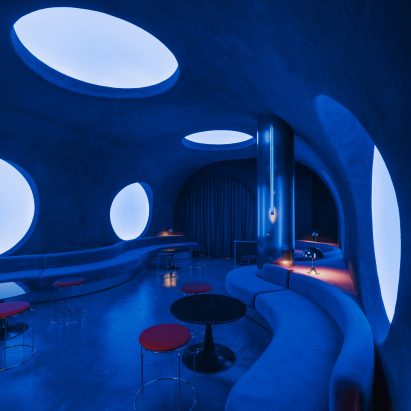
Spanish designer Isern Serra has unveiled a Barcelona cocktail bar that revives the Space Age interiors of the late 1960s, fitting the speakeasy with multi-coloured modular furniture inspired by Verner Panton's retro-futuristic installations. Named Focacha, the hidden venue is the latest project from hospitality group Grupo La Confiteria.
A speakeasy hidden behind a focacceria
The bar sits on Tuset Street, a stretch that was central to Barcelona nightlife during the 1960s and early 1970s and a magnet for the liberal young creatives known locally as the "gauche divine". To reach it, guests pass through a traditional focacceria that has baked Italian bread for 50 years, then step through a refrigerator inside the shop — a piece of theatre that sets the tone before the first drink is poured.
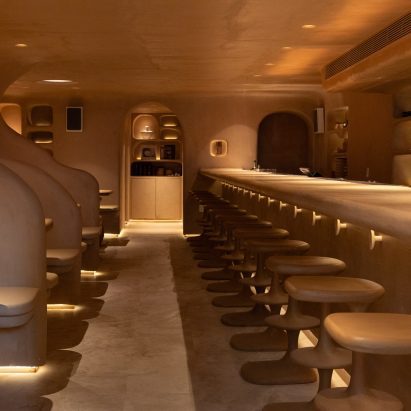
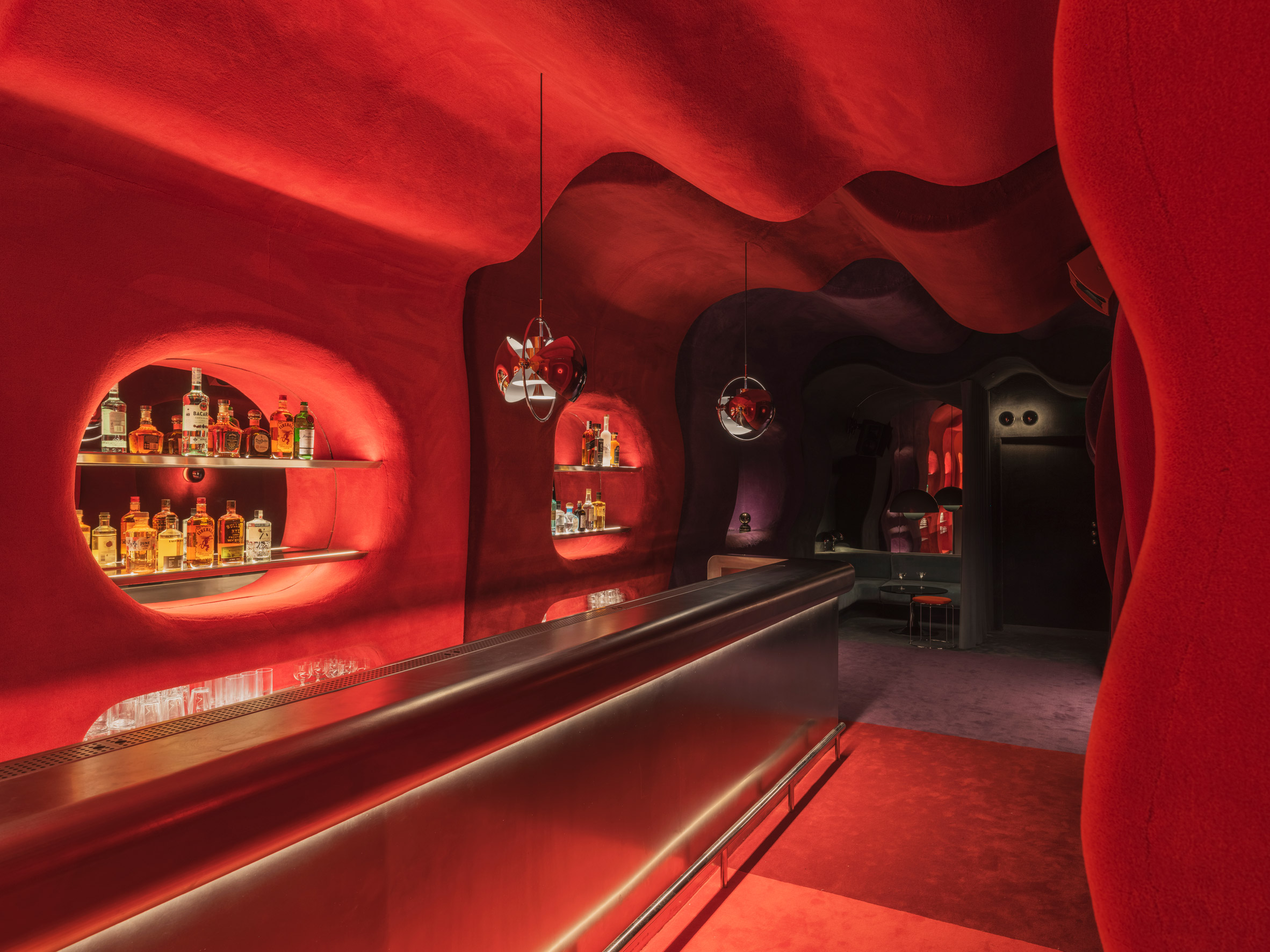
Serra split the venue into two rooms. The first pays homage to Panton's celebrated Visiona environments, with a sequence of seven organically shaped modules that shift in colour from yellow through to red. They wrap the space and form intimate niches for small groups along one wall.
Modular forms and a sculptural build
Opposite the modules, a stainless-steel bar with rounded edges reflects the room's colour and movement. The ceiling and walls are fully carpeted and continue behind the counter, where rounded openings hold shelves of bottles. A circular doorway leads into a DJ room lined with curved banquettes, where a domed ceiling carries openings for dynamic lighting that reshapes the mood throughout the night.
Serra told Dezeen he wanted visitors to feel "enveloped by an environment with a strong artistic and emotional presence". His aim, he explained, was less to design a cocktail bar than "to create a setting that evokes emotions, encourages contemplation and leaves a lasting impression".
- Designer: Isern Serra, based in Poblenou, Barcelona
- Client: Grupo La Confiteria
- Layout: Two rooms — a module-lined bar and a domed DJ space
- Reference: Verner Panton's 1960s Visiona installations
Why the Space Age design matters
The studio leaned on Panton because his visual language captures the "optimistic, experimental and progressive spirit" of the era. The goal, Serra noted, was not to recreate a retro aesthetic but to channel the sense of freedom and innovation that defined it. Mirrored walls stretch the sense of space, while Panton's own Flowerpot VP2 and Panthella lamps reinforce the curated atmosphere.
According to Serra, the interior's complex curves demanded a sculptural approach in which elements were not fully fixed at the outset but evolved through mock-ups and full-scale prototypes. Rather than building conventional architecture, the team shaped volumes to create a fluid, immersive experience where every curve adds to the atmosphere.
A wider revival of mid-century colour
The project continues a run of vibrant, Mediterranean-influenced work from the studio, and it lands amid a broader revival of bold mid-century colour across hospitality design. Operators are increasingly betting that a memorable, photogenic interior is itself part of the experience, drawing guests who come as much for the room as for the menu.
For more on standout interiors and product design shaping today's venues, browse our latest design and product coverage, or keep up with fresh launches on our news feed.
Frequently asked questions
Where is the Barcelona cocktail bar located?
Focacha sits on Tuset Street, a historic Barcelona nightlife strip, and is reached by walking through a working focacceria and stepping through a refrigerator inside the shop.
Who designed the Space Age interior?
The interior is the work of Spanish designer Isern Serra for hospitality group Grupo La Confiteria, drawing directly on Verner Panton's 1960s Visiona installations.
What makes the design distinctive?
Seven organically shaped modules shift in colour from yellow to red, paired with carpeted walls and ceilings, a rounded stainless-steel bar and a domed DJ room with dynamic lighting — all built through full-scale prototyping rather than fixed plans.