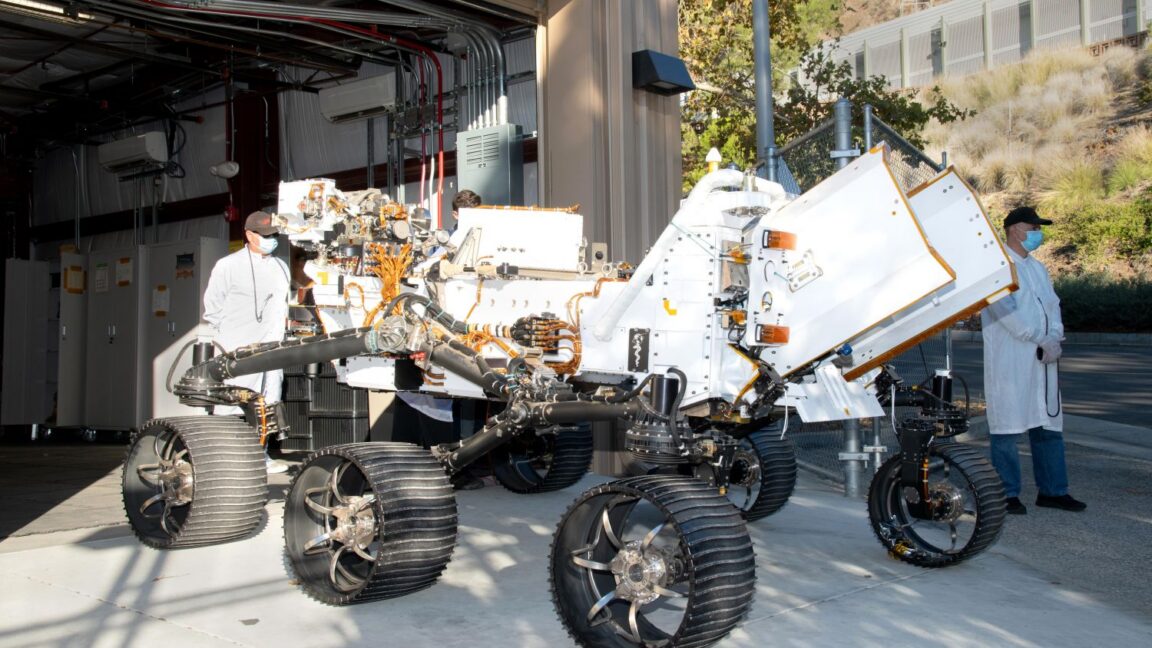
NASA is seriously considering sending a nuclear-powered backup Mars rover to the Moon to speed up exploration of the lunar south pole. The full-scale engineering model, nicknamed Promise and currently housed at the Jet Propulsion Laboratory in California, would land equipped with a nuclear power source that lets it drive across difficult terrain and keep working through the long lunar night.
What the Promise rover is
Promise is not a brand-new spacecraft. It is the full-scale engineering model that serves as a ground-based testbed for the Perseverance rover, letting engineers try fixes and commands on Earth before sending them to rovers on Mars. It was never otherwise planned for a launch.
NASA has framed the vehicle as PROMISE, short for Polar Rover for Observation, Mapping and In-Situ Exploration. The car-sized rover was developed at JPL, where it has doubled as a practical test platform for the agency's flagship Mars machines. Repurposing it for the Moon would put existing, proven hardware to new use. It is a striking example of resourcefulness in modern space science.
Why nuclear power is the key
The rover's defining advantage is how it makes electricity. Promise would carry a multi-mission radioisotope thermoelectric generator, or MMRTG, which converts heat from naturally decaying radioactive material into power. That means it does not need sunlight to operate.
On the Moon, that is a decisive edge. Most of NASA's rovers run primarily on solar power, but many lunar locations endure long stretches of darkness, and the south pole in particular has a notoriously complex lighting environment. A nuclear-powered rover could keep exploring:
- Through the extended lunar night, when solar panels would be useless.
- Across difficult, shadowed terrain near the pole.
- Without waiting for sunlight to recharge, extending mission time.
That endurance is exactly what makes the idea so appealing to mission planners.
What NASA leaders are saying
NASA Administrator Jared Isaacman confirmed the agency is weighing the move during a monthly update on plans to build a Moon base. He said officials are thinking very hard about sending Promise to the Moon, while stressing that the mission is still being defined.
Isaacman added that there is very little that would hold the agency back from making use of the hardware, and that sending it to the Moon would bring an immense capability to the lunar south pole in short order. In other words, the appeal is speed: using a rover that already exists to accelerate exploration rather than waiting years for a purpose-built machine.
Why the south pole matters
The target is no accident. NASA plans to build its Artemis base near the Moon's south pole, a region believed to hold an abundance of water ice, which could support future crews and even be processed into fuel.
Sending a capable, nuclear-powered rover there ahead of a base would let NASA scout and map the terrain, hunt for resources and validate technology in one of the most scientifically valuable and operationally challenging places on the Moon. The plan is not finalized, but the logic is clear: leverage a spare, battle-tested rover to jump-start exploration of the terrain where humanity's next lunar outpost may rise. Follow the mission's progress through our ongoing science coverage.
Frequently asked questions
What is the Promise rover?
Promise is the full-scale engineering model of the Perseverance rover, used as a ground testbed at JPL. NASA is considering sending it to the Moon as a nuclear-powered lunar rover.
Why would NASA use nuclear power instead of solar?
The rover's MMRTG generates electricity from decaying radioactive material, so it does not need sunlight. That lets it operate through the long lunar night and in the shadowed south-pole terrain where solar power falls short.
Is the mission confirmed?
Not yet. NASA Administrator Jared Isaacman says the agency is seriously considering it, but the mission is still being defined and has not been finalized.