Curved brick buildings prove that one of the oldest construction materials can still be coaxed into fluid, sculptural shapes. This roundup gathers eight standout projects where carefully laid brickwork bends into shells, ripples, turrets and snaking walls, spanning libraries, offices, homes, a cinema lobby and a mausoleum across several countries. Together they show how a humble rectangular unit can read as soft and continuous.
The appeal of curved brickwork is partly technical and partly poetic. Each course has to be offset slightly to follow a curve, so the geometry depends on craft and precise detailing rather than off-the-shelf components. The payoff is architecture that feels handmade and expressive, qualities these eight projects share despite their very different briefs.
Brick shells, ripples and snaking walls
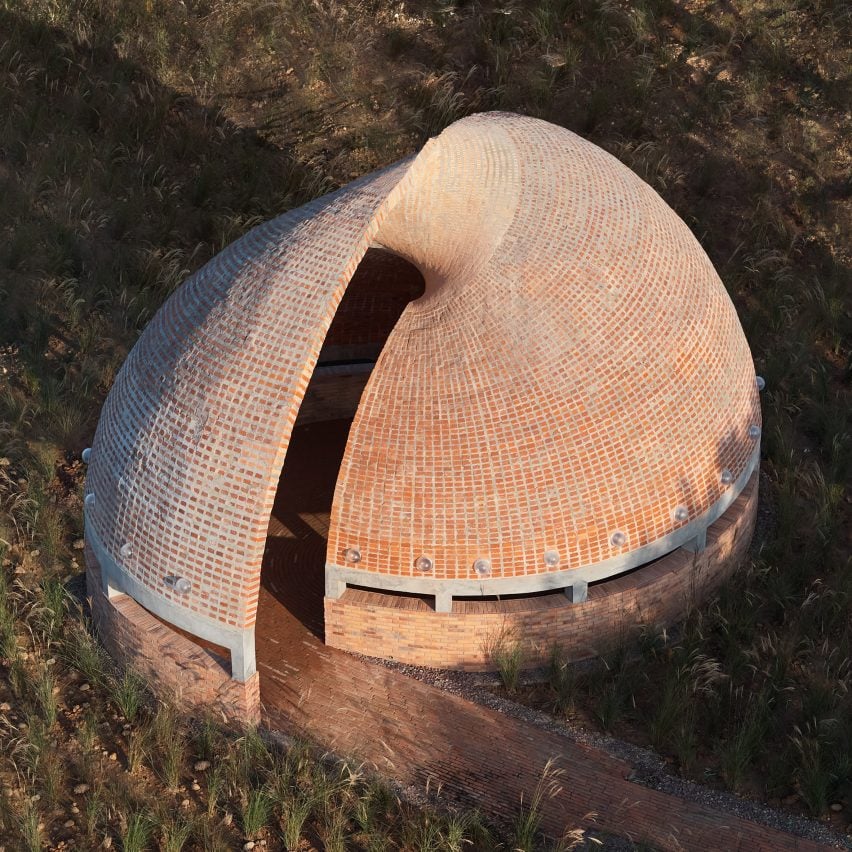
In Longyou County, China, HCCH Studio's Twisted Brick Shell Library joins two brick hemispheres with a twisting section of perforated steel and concrete, creating a calm reading room that looks out over surrounding farmland. In Maharashtra, India, Kaushal Tatiya Architects took cues from the internal chambers of anthills to shape three curving brick balconies that shade the rooms behind them, with perforated brick panels aiding cross-ventilation in a hot climate.
- Twisted Brick Shell Library, Longyou County, China, by HCCH Studio
- The Anthill, Maharashtra, India, by Kaushal Tatiya Architects
- W-Mission Headquarters, Seoul, South Korea, by Behet Bondzio Lin Architekten and BCHO Architects
- A Serpentine, London, UK, by Lanza Atelier
At textile manufacturer W-Mission in Seoul, a red-brick facade gradually shifts into a rippling pattern as it climbs ten floors, a deliberate nod to the materiality of folded cloth. In London's Kensington Gardens, Mexican studio Lanza Atelier built this year's Serpentine Pavilion, titled A Serpentine, as a curving brick wall assembled entirely without mortar; steel plates hold the bricks in place so the structure can be taken apart and reused. You can explore more design and engineering features in our science and innovation section.
Sculptural brick interiors and reclaimed materials
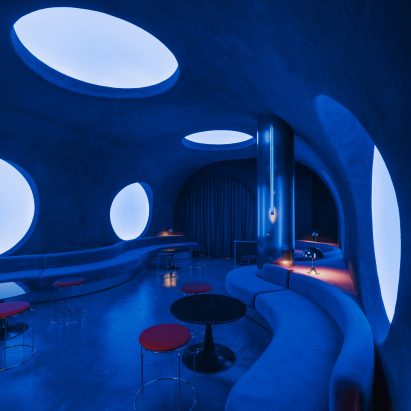
One Plus Partnership reworked a cinema lobby in Haikou, China, with curved red-brick forms that rise from the floor as seating and tables, then dip down from the ceiling to conceal lighting and ventilation, echoing the rolling sea nearby. In London, Corstorphine & Wright's The Scoop carves a deep gouge into a white-brick office facade, framing the circular window of a neighbouring listed church and turning a structural move into a piece of urban theatre.
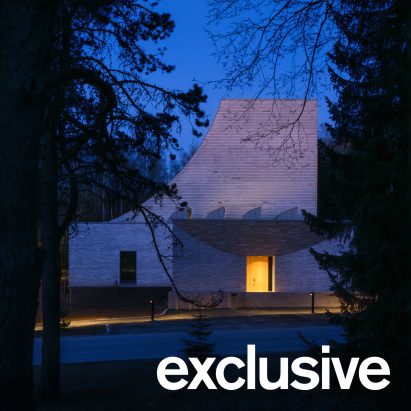
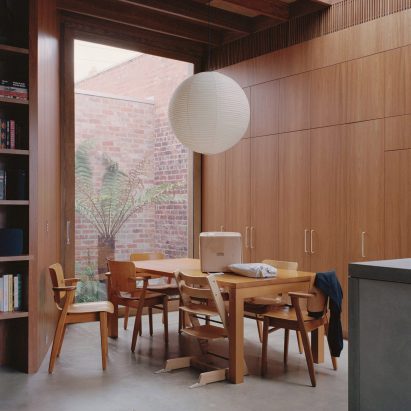
The selection closes with two contrasting works. The Shah Muhammad Mohshin Khan Mausoleum in Bangladesh, by Sthapotik, is wrapped in cylindrical brick turrets capped with skylights that wash the interior in daylight. In Ghent, Belgium, BLAF Architecten's GjG House uses reclaimed brick walls that curve around the plot specifically to preserve existing trees, proving the technique can be sustainable as well as striking. For more building studies, browse our latest roundups.
Why curved brickwork matters now
Beyond their looks, these projects hint at where masonry is heading. Reclaimed and perforated brick reduce waste and improve ventilation, while a mortarless, demountable pavilion points toward a circular approach in which buildings can be disassembled rather than demolished. Curved brick, in other words, is not just decorative nostalgia but a way to make a low-tech material answer contemporary demands for craft, climate response and reuse.
Curved brick buildings: quick questions
How do bricks form a curve?
Builders offset each course slightly and rely on precise jointing, sometimes adding steel supports, so straight units gradually trace a curved or twisting line.
Which building uses no mortar?
Lanza Atelier's A Serpentine, this year's Serpentine Pavilion in London, is assembled with steel plates instead of mortar so it can be disassembled and reused.