Hawaii is turning ocean plastic and discarded fishing nets into asphalt roads, and early testing suggests the recycled pavement does not shed any more microplastics than a conventional road surface. The finding points to a practical destination for plastic waste that would otherwise pile up in landfills or wash back into the Pacific, addressing two stubborn problems at once.
Why Hawaii is testing recycled plastic roads
Recycling on the islands is expensive, and marine debris keeps washing ashore, with foreign derelict fishing gear singled out as the single largest contributor to Hawaii's marine debris problem. Researchers from the Center for Marine Debris Research at Hawaii Pacific University, working with the Hawaii Department of Transportation and the University of Hawaii, set out to test whether recycled plastics could replace some virgin polymer in road asphalt without hurting performance or the environment.
Since 2020, most Hawaii roads have used polymer-modified asphalt (PMA), which resists cracking, rutting and water damage in a hot, wet tropical climate. Standard PMA melts styrene-butadiene-styrene (SBS) pellets into a petroleum binder. The experiment swapped that virgin polymer for recycled polyethylene drawn from Honolulu household recycling and from old fishing nets. The project connects marine cleanup directly with infrastructure, a theme explored across our science coverage.
- Three test mixes: standard SBS, recycled household polyethylene, and fishing-net polyethylene
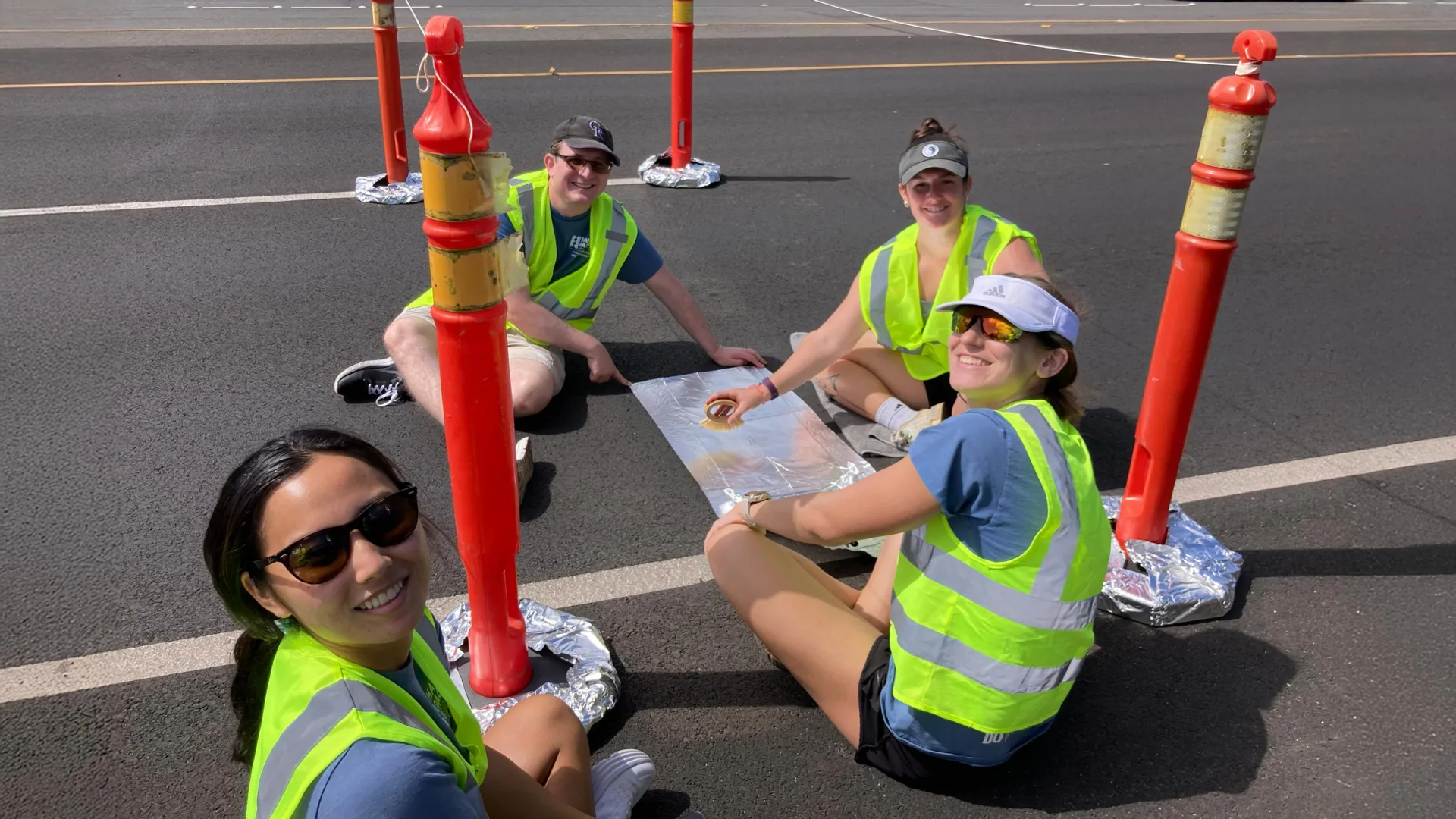
- Field trial: a residential street on Oahu
- 84 tons of derelict fishing gear removed from the Pacific via the Bounty Project
What the microplastic tests found
About 11 months after paving, the team swept up road dust and analysed it with pyrolysis gas chromatography-mass spectrometry (Py-GC-MS) to trace which materials were breaking away. Pavement made with recycled polyethylene did not release more polymers than the conventional SBS pavement, and the same held true in lab testing and in simulated stormwater runoff.
Crucially, the dominant source of particles was not the road binder at all but the tires driving over it. "Tire wear swamps the signal of polyethylene by orders of magnitude," said CMDR director Jennifer Lynch, noting that only a very small number of detected particles were polyethylene. As any road wears, the fragments that come loose are a mix of rock, binder and polymer rather than plastic alone, which reframes how we think about road pollution.
A possible future for plastic waste
More work is needed to confirm long-term durability under heavy traffic and relentless tropical sun, but the researchers believe the method could cut both landfill waste and ocean debris if it is scaled up across the islands. Embedding plastic in a stable matrix like asphalt also locks it away inside the road rather than leaving it loose in the environment, where it could fragment and spread. "This work demonstrates that recycling can work when society prioritizes sustainability," Lynch said. The research was funded by the Hawaii Department of Transportation, which has a direct interest in cheaper, greener paving materials. For more clean-tech reporting, see our sustainability and EV section.
Recycled plastic roads: key questions
Do recycled plastic roads release more microplastics?
No. In Hawaii's tests, pavement made with recycled polyethylene shed no more polymer than standard SBS asphalt, both on the road and in simulated stormwater. Tire wear produced far more particles than the binder.
What plastic is used to pave the roads?
Recycled polyethylene from Honolulu household recycling and from discarded fishing nets replaces some of the virgin SBS polymer normally melted into the asphalt binder.