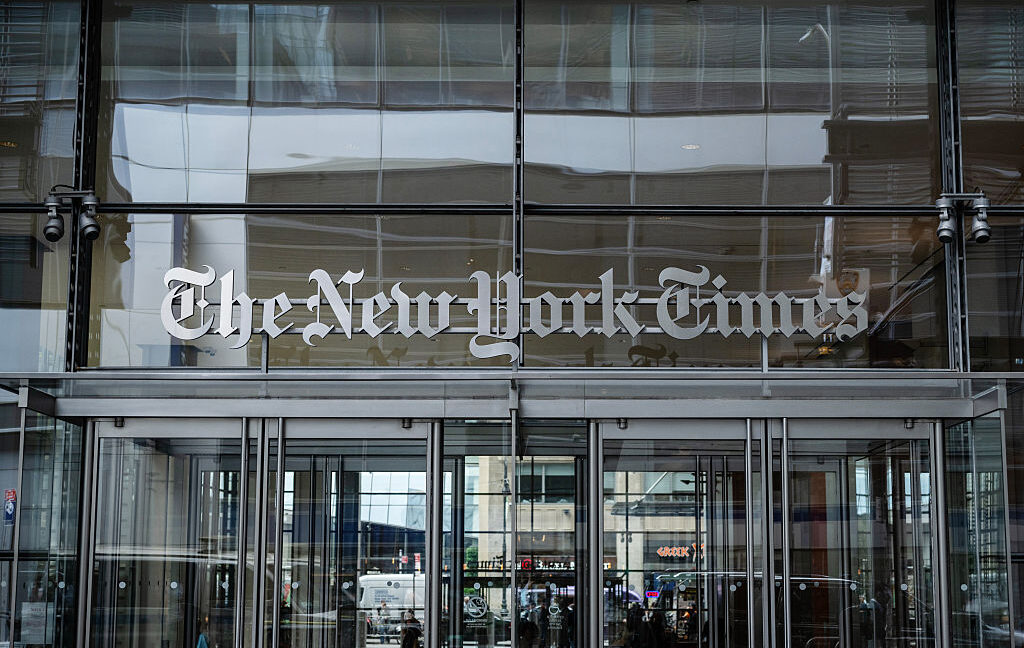
The New York Times has asked a court to amend its copyright lawsuit against OpenAI and Microsoft, alleging that Microsoft actively encouraged infringement by building a custom supercomputer ranked among the most powerful in the world. The proposed change reshapes one of the most closely watched legal fights over the data used to train AI models.
What the amended complaint against Microsoft alleges
In a heavily redacted court filing on Thursday, the Times proposed to clarify its claim and argue that Microsoft induced OpenAI to use NYT works by constructing a bespoke supercomputing system. The newspaper says the change reflects both new law and new evidence uncovered during discovery, the fact-finding phase where each side exchanges internal documents.
Today, we asked the court for permission to file an amended complaint that further strengthens our case, clarifying our claim of contributory infringement against Microsoft based on new law and new evidence uncovered during discovery.
That statement came from NYT spokesperson Graham James. The newspaper first sued OpenAI and Microsoft in late 2023, accusing them of using millions of its articles without permission to train large language models, and the case has become a bellwether for the publishing industry's broader fight with AI developers.
How a Supreme Court ruling changed the legal math
The timing follows a Supreme Court decision siding with Cox Communications after Sony tried, and failed, to hold the internet service provider responsible for contributing to music piracy. That outcome set a tougher standard for contributory infringement claims.
- New standard: plaintiffs must show a party intentionally acted to induce illegal conduct
- NYT response: realign its contributory infringement claim against Microsoft to fit that bar
- Basis: new legal precedent plus evidence gathered during discovery
Before the ruling, contributory infringement claims could rest on a looser theory of responsibility. Now plaintiffs must demonstrate that a defendant intentionally acted to induce illegal conduct, a meaningfully higher hurdle. Because the precedent shifted, the Times wants its claim to match the tougher intent requirement, framing Microsoft's purpose-built supercomputer as evidence the company encouraged the alleged copying rather than merely providing neutral tools.
Much of Thursday's filing was redacted, so the precise new evidence is not public. Still, the Times signaled it believes the discovery material strengthens its position. For more on the legal and corporate stakes, see our artificial intelligence coverage and ongoing business reporting.
Why this AI copyright case matters
By focusing on the infrastructure Microsoft built, the Times is testing how the new contributory infringement standard applies to companies that enable AI development rather than train the models themselves. That distinction could prove pivotal, because cloud and compute providers sit behind nearly every large AI system in existence.
If a court accepts that designing and operating a bespoke supercomputer amounts to inducing infringement, the precedent could ripple across the industry. It would force providers to rethink how they structure relationships with AI developers, and it could expose them to liability for what their customers do with the hardware. For now the request is procedural, but it sharpens the central question hanging over generative AI: who bears responsibility when copyrighted works are used to train these models.
Frequently asked questions
What is the New York Times suing OpenAI and Microsoft over?
The Times alleges the companies used millions of its articles without permission to train AI models, infringing its copyrights. The newspaper is now seeking to amend the complaint to sharpen a contributory infringement claim against Microsoft.
How did the Supreme Court Cox ruling affect the case?
The ruling, which favored Cox Communications over Sony, raised the bar for contributory infringement, requiring proof that a party intentionally induced illegal conduct. The Times is realigning its Microsoft claim to meet that stricter standard.
Why does Microsoft's supercomputer matter to the lawsuit?
The Times argues that building a bespoke, world-class supercomputer for OpenAI shows Microsoft actively encouraged the alleged infringement, rather than simply offering neutral cloud tools.