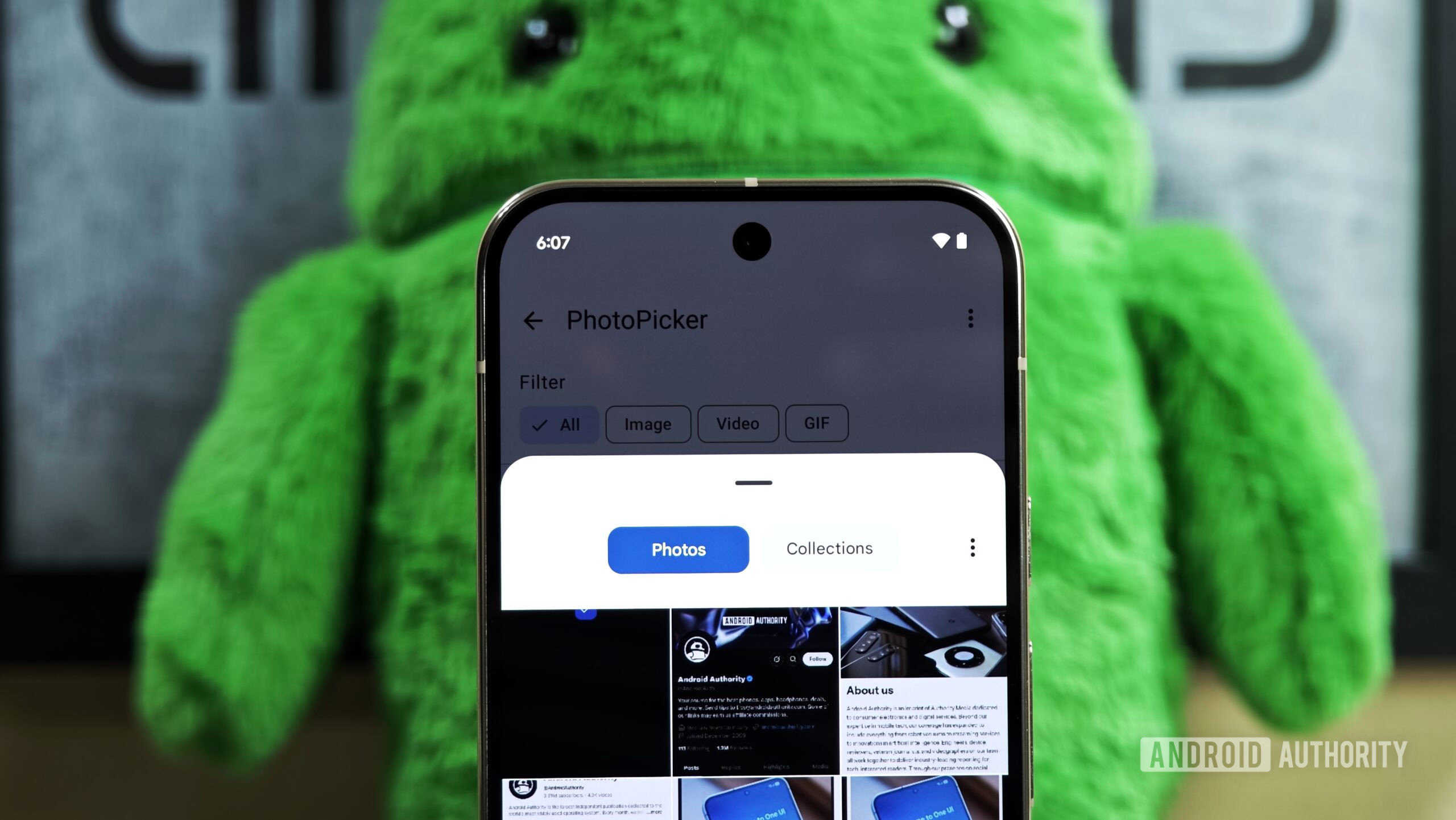
Android's Photo Picker location data restrictions may soon get more flexible, letting you choose whether to share a photo's GPS coordinates with the apps you use. Since the picker launched, every image shared through its interface has had its location metadata automatically stripped out, and new evidence suggests Google is finally preparing to change that.
What Android's Photo Picker does with location data today
Google introduced the Photo Picker API with Android 13 as a privacy-first alternative to full gallery access, part of a broader tightening of Android's privacy controls. Instead of granting an app blanket permission to view your entire photo library, the picker opens a system-controlled interface: you choose the specific images to share, and the app never sees anything else. As an extra safeguard, Google configured the tool to strip EXIF location data from every photo that passes through it, regardless of what the original file contained.
Why developers pushed back on stripped location data
That blanket stripping made sense as a default, but it created real problems for a specific category of software. Niche apps built around geotagged photos, including trip loggers, property inspection tools, and field-work apps, rely on a photo's location to function. Soon after the Photo Picker's introduction, developers began raising the issue directly with Google, arguing that removing EXIF data by default broke otherwise legitimate, non-invasive use cases. Google acknowledged the complaints back in 2022 and said it would consider adding an option for users to include location data on a case-by-case basis. Four years on, that promised flexibility appears close to arriving.
How the new location-sharing option might work
Newly surfaced evidence indicates Google has been building the infrastructure to let the Photo Picker preserve, rather than strip, GPS data when a user explicitly agrees to share it. The likely design mirrors how Android already handles other sensitive permissions: instead of an all-or-nothing rule baked into the picker itself, users would see a prompt or toggle at the moment of sharing, giving them final say over whether a photo's location tags travel along with the image. That keeps the privacy-by-default posture intact for anyone who doesn't need to share location data, while unblocking the apps that genuinely require it.
Why this matters and what comes next
There's no confirmed rollout timeline yet. The feature has only been spotted in early form, and Google hasn't announced when it will reach developers or everyday users. Features like this typically surface first through a Google Play system update or an upcoming Android release before going broadly live, so it could still be months away. Until then, any app that depends on photo location metadata will keep working around the restriction, and Photo Picker users should assume their location data is still being stripped by default.
The bigger story here is about control. Android's permission model has moved steadily toward granular choices rather than blanket switches, and the Photo Picker itself replaced broad gallery access with per-photo selection. Adding an explicit location-sharing choice extends that same philosophy: instead of Google deciding no app ever needs GPS data, the decision shifts to the person sharing the photo. For anyone who follows Android privacy features closely, this closes a long-standing developer complaint without reopening the door to apps silently harvesting location data the way they could before scoped photo access existed.
FAQ
Does the Photo Picker currently share my photo's location with apps?
No. Right now, any photo shared through Android's Photo Picker has its GPS and other location metadata automatically removed before the receiving app ever sees the file.
Will I have to opt in to share location data?
Based on the direction Google appears to be taking, sharing location data would be an explicit choice rather than a new default, with the picker continuing to strip GPS data unless you specifically allow it for a given photo or app.
Which apps benefit most from this change?
Niche tools that depend on geotagged images, like trip-logging, property, or field-work apps, are the main beneficiaries, since they've had to build workarounds since the Photo Picker's stripping behavior debuted in Android 13.