A Google TV projector can genuinely replace a traditional television for many homes, offering portability, far simpler installation, and a screen that scales past 100 inches, all without bolting a permanent black box to your wall. After weeks living without a TV, one long-time projector user concluded their next "TV" purchase will likely be a high-end ultra-short-throw projector instead of a panel.
No permanent black box on the wall
Even premium lifestyle TVs designed to disappear into a room carry trade-offs. The Samsung Frame Pro, for example, demanded a hefty outlay to disguise it, yet weak software meant its art mode often went unused, leaving a large black rectangle on the wall anyway. A projector flips that logic: it sits on a media console or beside the couch and claims no wall real estate, freeing that space for art, shelving, or decor while a screen drops down only on demand.
Carry your entire TV anywhere
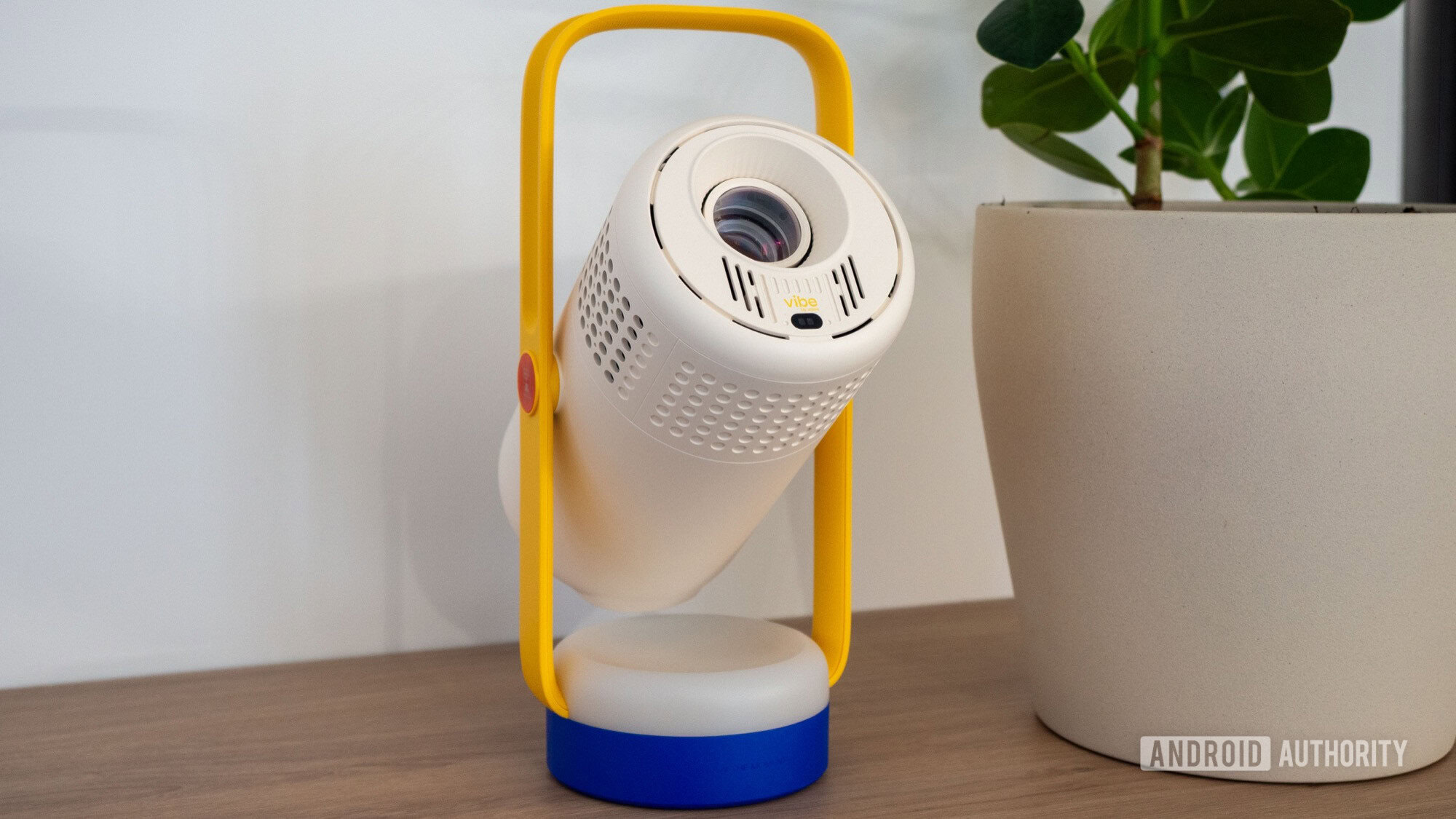
Many Google TV projectors are portable models with a built-in battery, bundling the display, streaming software, speaker, and power into a single unit. That makes it easy to shift from watching YouTube on kitchen cabinets, to mirroring a phone on an office wall, to streaming a film on a bedroom ceiling, with no separate speakers, HDMI cables, or power runs. Cheaper portable units suit guest rooms and outdoor movie nights, while ultra-short-throw models can serve as a serious primary display that is still far easier to reposition than a 65-inch panel.
Easier to install on almost any surface
Mounting a large TV has only gotten fiddlier, with holes to drill, cables to hide, and, in one case, an entire heavy panel to unmount just to start a warranty repair. A Google TV projector sidesteps all of that:
- Slanted walls and ceilings are no obstacle thanks to keystone correction.
- No wall available? Use a white curtain or a roll-up screen.
- Most Google TV projectors need only a single power cable.
- Even the heaviest weigh around 10kg, easy to move and service.
Go big without buying new hardware
Screen size is fixed when you buy a TV, but a projector adapts to the room. The same unit might throw a 73-inch image on one wall and 100 inches or more on another, or onto a ceiling, without adding a single pound to the setup or requiring a new purchase. That flexibility is hard to match with any fixed panel.
Google TV built in
While Google TV is fading from many television brands, it remains near-universal among projectors from XGIMI, TCL, Dangbei, Epson, and others, with no separate streaming stick needed. That brings Chromecast support, Google Home control, and your usual apps out of the box. For more on the latest portable models and smart-home gear, browse our product reviews, with extra buying advice across our mobile and gadget coverage.
Downsides, but not dealbreakers
Projectors still trail TVs on contrast and peak brightness, want a darker room for the best image, and the weaker built-in speakers and fan hum can be noticeable. Yet the best ultra-short-throw models have addressed many of these issues, and for someone who values flexibility over outright picture perfection, a Google TV projector increasingly looks like the lower-hassle choice for the next big-screen upgrade.
Frequently asked questions
Can a projector really replace a TV?
For many homes, yes. A modern Google TV projector handles streaming, built-in audio, and a screen far larger than most panels, though it performs best in a darker room and trails TVs on peak brightness and contrast.
Do Google TV projectors need a separate streaming stick?
No. Google TV is built in on models from XGIMI, TCL, Dangbei, Epson, and others, bringing Chromecast, Google Home, and your apps out of the box without extra hardware.
Are projectors hard to install?
Generally easier than mounting a large TV. Most need only a power cable, handle slanted walls and ceilings via keystone correction, and can project onto a curtain or roll-up screen when no wall is available.