Most weird cat behaviors have a clear explanation rooted in instinct, communication and biology, not random feline chaos. From chattering at a window to leaving a dead mouse by the door, the habits that baffle owners almost always trace back to hunting, scent-marking or comfort. Understanding what your cat is actually telling you makes it far easier to meet its needs, and to spot the moments when a quirk is really a warning sign.
Hunting and prey instincts explained
When a cat drops a mouse at your feet, it is echoing how wild mothers carry prey home to teach kittens to hunt. The gesture is well-intentioned, a kind of feline gift, though it is worth gently discouraging since dead animals can expose your household to parasites and disease.
The rapid chattering cats make at birds through glass is another hunting tic. It surfaces when prey is visible but unreachable, a mix of excitement and frustration. A chattering cat usually just needs more enrichment and structured playtime to burn off that predatory drive.
Knocking things off tables
Cats are far too coordinated for this to be simple clumsiness. Swatting objects off ledges usually comes down to curiosity and boredom, and the cause-and-effect of a falling cup is genuinely fascinating to a cat. Redirect that energy with interactive toys rather than shouting, which only frustrates the animal and teaches it nothing.
Comfort and communication signals
Kneading, often called "making biscuits," starts in kittenhood, when nursing kittens press their mother's belly to stimulate milk flow. The motion stays linked to comfort and security for life, and scent glands in the paws add a subtle territorial layer, marking the spot, or the lap, as their own.
- The Flehmen response: that open-mouthed grimace draws scent into the vomeronasal organ in the roof of the mouth to read pheromones in detail.
- Bunting: head-rubbing deposits cheek pheromones, marking people and objects as safe, familiar and part of the cat's territory.
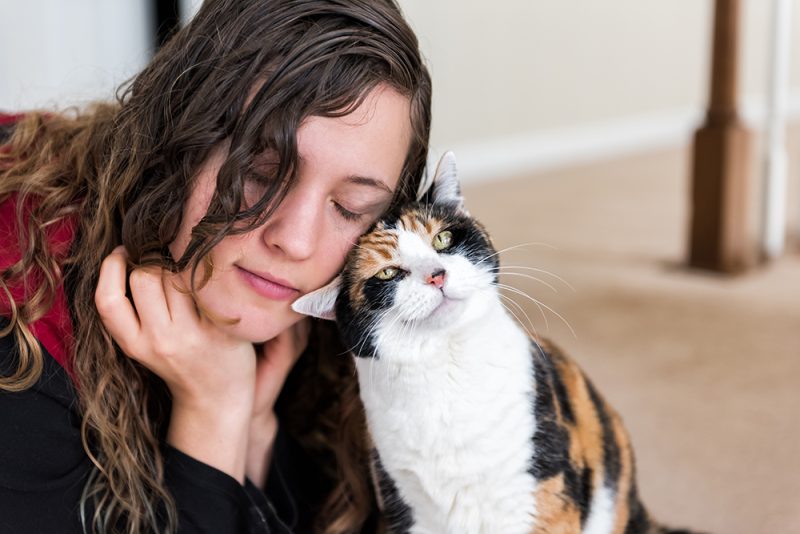
- The slow blink: often called a kitty kiss, it signals trust and contentment, and returning it slowly is usually well received.
- Sleeping on laptops: they are warm, slightly elevated and carry a strong human scent, an almost irresistible combination for a heat-seeking cat.
Read together, these signals show just how much communication is happening in plain sight. For more on feline body language and everyday care, our pet health guides break down the cues worth watching.
When a behavior signals stress
Some habits deserve a closer look rather than a shrug. Urine marking, typically on vertical surfaces, is tied to territorial and sexual signaling and is frequently triggered by stress, new pets in the home or unfamiliar cats prowling nearby. Synthetic pheromone diffusers near doors and windows can help settle a cat that feels its territory is under threat.
Overgrooming is another behavior to watch. It can be a self-soothing response to anxiety, but when licking fixates repeatedly on one spot or causes hair loss, it is time to book a vet visit to rule out skin conditions, pain, allergies or infection. Catching that early can prevent a manageable issue from becoming a chronic one.
Why understanding cat behavior matters
The more owners learn to read these behaviors, the easier it becomes to keep a cat happy, enriched and healthy. Cats communicate constantly through posture, scent and sound; we just do not always speak their language. Treating odd habits as information rather than nuisance turns a confusing pet into a far more predictable companion. For more feline explainers, keep browsing our latest pet news and guides.
Frequently asked questions
Why do cats bring you dead animals?
It mirrors how wild mother cats carry prey home to teach kittens to hunt. It is a well-meaning gesture, though worth discouraging since dead animals can carry parasites and disease.
What does a slow blink from a cat mean?
The slow blink, sometimes called a kitty kiss, signals trust and contentment. Slowly blinking back is generally well received and can strengthen the bond.
When should I worry about my cat's behavior?
Watch for stress signals like urine marking on vertical surfaces or overgrooming. If overgrooming focuses on one spot or causes hair loss, see a vet to rule out skin conditions, pain or infection.