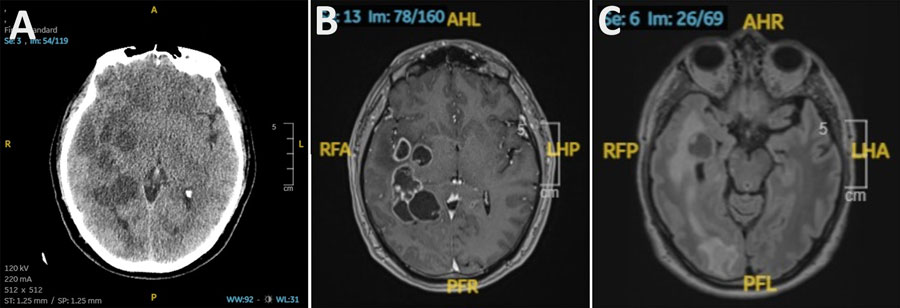
A suspected brain cancer case in a 60-year-old man from Spain turned out to be a parasitic worm infection, doctors revealed in a published case report. What began as a persistent headache and subtle personality changes ended with imaging that uncovered something far stranger than a tumor — and a single lab value that quietly redirected the entire investigation.
From a stubborn headache to alarming scans
The patient first sought care for a headache that had lasted roughly two weeks and kept getting worse. He also reported small shifts in his own behavior. During a neurological exam, physicians noted only a mild slowing of his movements, with no other clear deficits to explain the symptoms.
His bloodwork looked mostly normal, with one striking exception: elevated IgE, an antibody tied to allergic reactions, autoimmune conditions and, crucially, parasitic infections. That clue pushed the team to image his head, where the picture grew more serious.
- Symptoms: a two-week headache and subtle behavioral changes
- Exam: mild delay in movement, no other neurological deficits
- Lab flag: raised IgE, a marker often linked to parasites
- Imaging: multiple brain lesions accompanied by swelling
Why doctors first suspected brain cancer
A computed tomography (CT) scan showed multiple lesions scattered across the brain, accompanied by swelling. Faced with that pattern, the medical team initially considered metastatic cancer their leading explanation.
Two details made cancer the obvious first guess. The man was not immunocompromised, and he had never traveled internationally — a history that usually lowers suspicion for exotic parasitic diseases clinicians more often associate with travel to endemic regions. With several lesions spread across the brain and visible swelling, a spreading tumor fit the picture neatly, at least at first glance.
The clue that changed the diagnosis
Working through the differential diagnosis, doctors eventually identified the true culprit as worms rather than a malignancy. The elevated IgE proved to be the thread worth pulling, since that antibody commonly rises in response to parasitic infections. The full case was documented in the journal Emerging Infectious Diseases, where the team described how they reasoned through the competing explanations and arrived at the parasitic cause.
Unusual infections that mimic more familiar diseases are a recurring theme in medical literature. You can follow similar stories in our health and medical coverage, and read more about diagnostic technology and biology in our science section.
Why this brain cancer case matters
This case underscores how overlapping symptoms can point clinicians toward the wrong diagnosis before a key lab value redirects the investigation. A headache combined with behavioral changes and multiple brain lesions understandably raises cancer concerns, yet the resolution here was a treatable parasitic infection rather than a tumor.
It is a vivid reminder that a thorough workup matters, and that a seemingly minor abnormal result — like raised IgE — can reshape an entire diagnosis. For patients, the lesson is less about worms specifically and more about the value of persistence when symptoms do not add up. For clinicians, it reinforces how careful pattern recognition can separate a frightening initial impression from the real, and often far more treatable, cause.
Frequently asked questions
What is IgE and why did it matter here?
IgE is an antibody the body produces in response to allergies, autoimmune activity and parasitic infections. Because it was elevated, doctors had a reason to look beyond cancer and consider a parasite, which ultimately proved correct.
Can a parasitic infection really mimic brain cancer on a scan?
Yes. In this case the CT scan showed multiple lesions and swelling, a pattern consistent with metastatic cancer. Only the abnormal blood marker and a careful differential diagnosis revealed the worms behind the images.
Did the patient need to have traveled abroad to get this infection?
No. He had never traveled internationally, which is part of why cancer was suspected first. The case shows that parasitic brain infections can occur without the travel history clinicians typically associate with them.