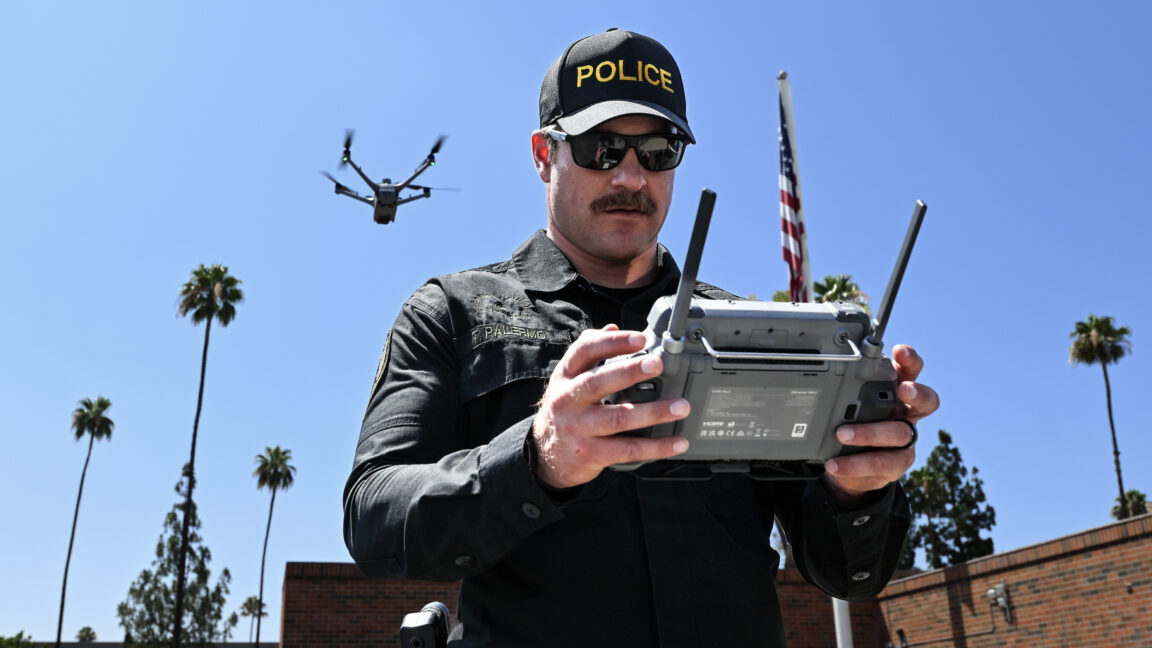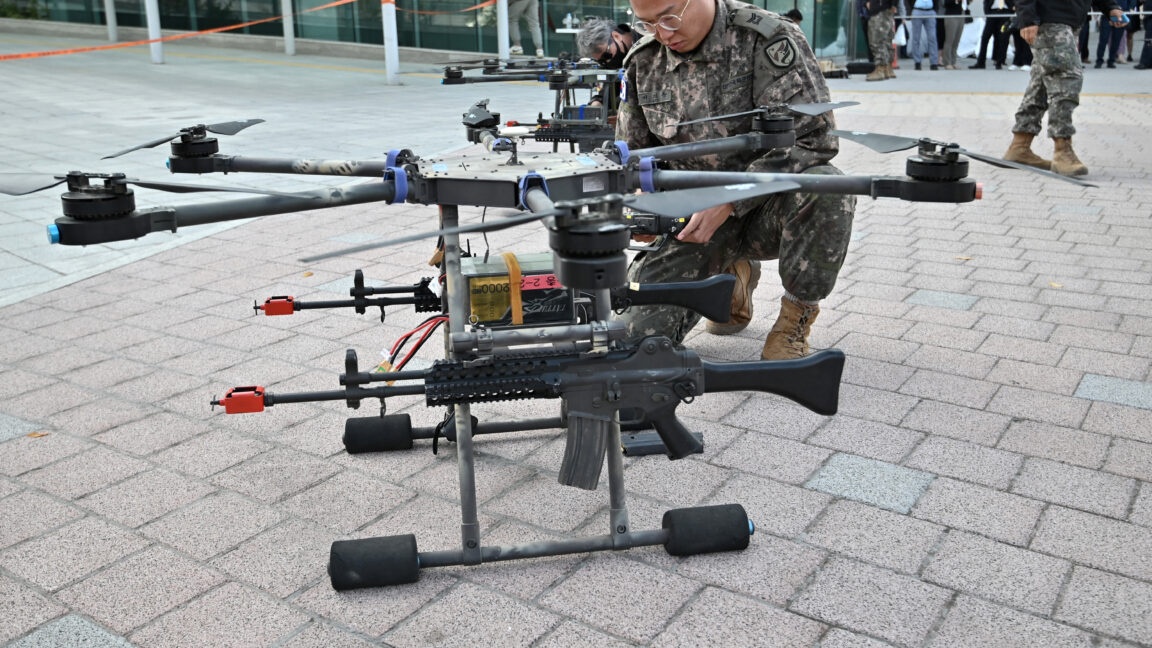
South Korea plans to train its entire military, nearly half a million personnel, to operate drones as easily as they handle personal firearms. Announced as Seoul works to keep a technological edge in its 70-year border standoff with a hostile, larger North Korea, the goal is to make drone operation a universal combat skill for every service member rather than a specialty confined to a few units.
Drones as a second personal weapon
Defense Minister Ahn Gyu-back outlined the plan in a June 26 briefing, saying the aim is to make drones a universal combat tool by training troops to use them like a second personal weapon. The framing is deliberate: just as every soldier is expected to handle a rifle, every soldier would be expected to fly and fight with a drone.
That reflects how rapidly uncrewed systems have reshaped modern warfare. By treating drone skills as a baseline capability rather than a niche role, South Korea is attempting one of the most sweeping efforts yet to make drone operation standard soldiering for a force of nearly half a million. For more on military and emerging technology, see our technology coverage.
What the plan includes
The initiative goes well beyond training and points to a broader overhaul of how South Korea equips and organizes its forces:
- Training the roughly 500,000-strong military to operate drones.
- Equipping individual units with more cheap, expendable drones for surveillance and strike missions.
- Deploying additional counter-drone lasers and microwave weapons to defend against enemy systems.
- Reorganizing the former drone operations command to focus on developing and procuring commercial drone technology.
That last point marks a real structural shift. Previously, the drone operations command held direct command authority over combat units. Under the overhaul, it will instead concentrate on collaborating with South Korean industry to develop and procure commercial drone technology, tightening the link between the armed forces and domestic manufacturers.
Lessons from Ukraine and the Middle East
The defense minister specifically cited the conflicts in Ukraine and the Middle East as inspiration for the reforms. Both theaters have demonstrated how inexpensive, mass-produced drones can prove decisive for reconnaissance and attack alike, often punching far above their cost against conventional armor and fortifications.
The plan, detailed in the June 26 briefing and reported by outlets including Reuters and The Korea Times, frames drones as central to keeping pace with a fast-changing battlefield. Rather than betting on a small pool of elite specialists, Seoul is wagering that scale and accessibility will define the next phase of warfare along one of the world's most heavily fortified borders.
Why it matters and what comes next
Embedding drone proficiency across an entire conscript-heavy military is a significant doctrinal bet. If it works, South Korea gains enormous flexibility: any unit, anywhere, able to deploy eyes in the sky or a cheap strike option without waiting for specialized support. Paired with a steady supply of low-cost hardware and dedicated counter-drone defenses such as lasers and microwave weapons, the announcement signals a long-term commitment to drone-era warfare rather than a one-off initiative.
The challenge will be execution. Training 500,000 personnel to a useful standard, sustaining a pipeline of expendable drones, and integrating all of it into existing command structures is a vast logistical undertaking. But the direction of travel is unmistakable, and it mirrors a global rethink of how militaries fight in an age when a drone costing a few hundred dollars can threaten hardware worth millions.
Frequently asked questions
How many troops will South Korea train to use drones?
Roughly 500,000, effectively the entire military. The goal is to make drone operation a universal skill, comparable to handling a personal firearm.
Why is South Korea doing this now?
Defense Minister Ahn Gyu-back cited lessons from the conflicts in Ukraine and the Middle East, where cheap drones have proven decisive, and the need to maintain a technological edge over North Korea.
What else does the plan involve besides training?
Equipping units with more cheap, expendable drones, deploying counter-drone lasers and microwave weapons, and reorganizing the drone operations command to focus on developing and procuring commercial drone technology with domestic industry.