Osteopenia is a silent loss of bone mineral density that affects around 40% of adults worldwide, and most people have no idea they have it until a fracture or a bone scan reveals the damage. It is especially common in postmenopausal women and older adults, and in the UK alone more than 500,000 fractures occur each year as a result of low bone density.
Why osteopenia develops
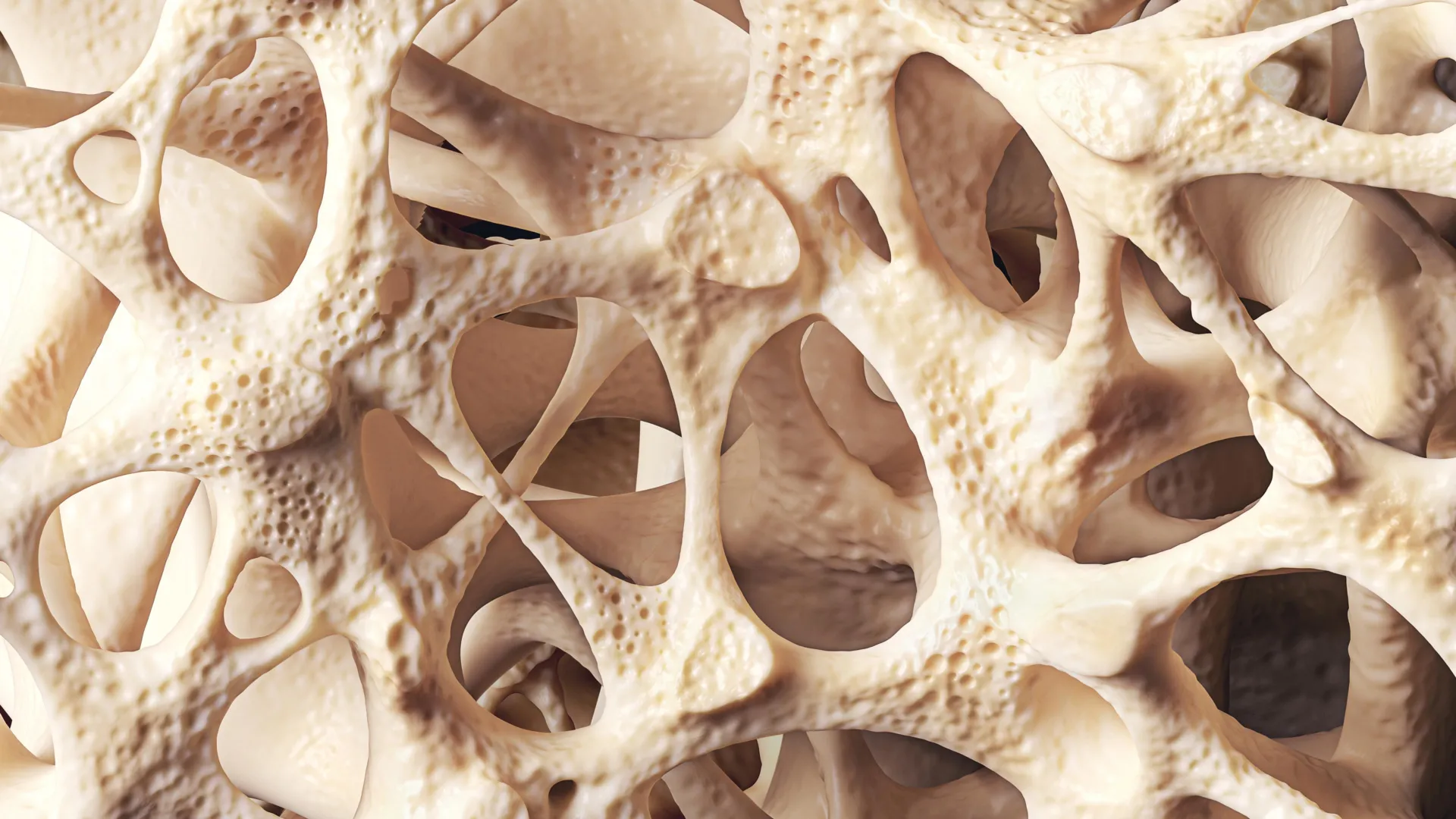
Bone is living tissue that constantly renews itself through a process called remodeling: old bone is broken down through resorption while new bone is laid down in its place. In early adulthood the two stay balanced, and bone mass usually peaks somewhere between the mid-20s and early-30s. After that, bone loss gradually begins to outpace formation, slowly reducing density year by year.
Ageing is the main driver, but several factors accelerate the process:
- Hormonal change – falling estrogen after menopause speeds up bone breakdown, and around one in two women over 50 will experience a fragility fracture.
- Lifestyle – smoking, excessive alcohol and physical inactivity all reduce bone strength.
- Diet – too little calcium and low vitamin D limit the body's ability to build and maintain bone.
- Medications and conditions – long-term steroid use, and disorders such as Crohn's or coeliac disease, raise the risk further.
The difference between osteopenia and osteoporosis
Osteopenia sits on a spectrum of bone loss. It is milder than osteoporosis but represents the same underlying problem: bones that are thinning and becoming more fragile. Catching it at the osteopenia stage offers a valuable window to intervene before density falls into the higher-risk osteoporosis range.
How osteopenia is diagnosed and managed
Bone mineral density is most commonly measured with a dual-energy X-ray absorptiometry (DXA) scan, a quick, low-dose X-ray that produces a T-score comparing your bones to those of a healthy young adult. A T-score between -1.0 and -2.5 indicates osteopenia, while a score below -2.5 meets the threshold for osteoporosis.
The encouraging news is that progression is not inevitable. Management focuses on slowing further loss and cutting fracture risk through lifestyle changes, nutrition and, in some cases, medication.
- Weight-bearing exercise such as walking, dancing or jogging stimulates bone formation.
- Resistance training strengthens bones and muscles, while balance-focused activities such as Tai Chi reduce the risk of falls.
- Calcium and vitamin D from dairy, leafy greens, fortified foods or supplements support healthy bone structure.
- Antiresorptive drugs may be recommended for high-risk patients or those who have already had a fragility fracture.
Why early action matters
Because osteopenia produces no symptoms, the first sign is often a broken wrist, hip or spine after a minor fall, an event that can seriously affect mobility and independence in later life. Treating bone loss as a warning rather than a minor footnote allows people to change course while their bones can still respond.
Experts stress that osteopenia is best understood not as a mild version of osteoporosis but as a clear signal and an opportunity for intervention. With early detection and the right habits, bone loss can be slowed and in some cases partly reversed, helping protect long-term strength and mobility.
Frequently asked questions
What T-score means I have osteopenia?
A DXA scan T-score between -1.0 and -2.5 indicates osteopenia. A score below -2.5 indicates osteoporosis, while -1.0 and above is considered normal bone density.
Can osteopenia be reversed?
Bone loss can often be slowed and sometimes partly reversed through weight-bearing exercise, resistance training, adequate calcium and vitamin D, and, where appropriate, medication. For more on staying well as you age, see our health coverage.