From Windows 8 to Copilot, here’s everything that was born at Build
Microsoft Build has been running annually since 2011, and in that time it has grown into the most consequential event in the Microsoft developer calendar.
Across 15 editions, it has served as the venue where the company signals what it wants developers to build on next, sometimes through finished products and sometimes through early previews that arrive months before the software ships.
Build 2026 runs on June 2 and 3 at Fort Mason Center in San Francisco, the first edition outside Seattle with a tighter capacity limit of 2,500 attendees.
What makes Build worth paying attention to is the company's track record of using it to surface genuinely significant products, not just announcements made for the sake of filling a keynote slot. Not everything that debuts at Build lands well, and a few have disappeared entirely.
But if you want to understand what Microsoft is betting on, Build is consistently where the company shows its hand.
Microsoft Build: Announcements, product launches, and early previews for developers
Build sits apart from Microsoft's other major events in terms of both audience and purpose. Ignite is aimed at IT administrators and enterprise buyers, Surface hardware launches are consumer-facing, but Build targets software developers using Microsoft’s ecosystem, whether they write Windows apps, run workloads on Azure, or build with GitHub and Microsoft's AI platform.
This distinction also shapes what gets announced and how. Sessions tend to focus on APIs, SDKs, preview capabilities, and platform architecture. Microsoft is speaking directly to the people who will decide whether to build with a new technology or ignore it, which means announcements need to be practical enough to evaluate on technical merits.
Sign up to the TechRadar Pro newsletter to get all the top news, opinion, features and guidance your business needs to succeed!
The timing of Build also matters commercially. Google I/O and Apple's WWDC both take place around the same period each year, and Microsoft is competing for the same pool of developers who will decide which platforms to prioritize. The gap between an exciting Build announcement and an actual shipment date can shift that calculation in Microsoft's favor, but it can also sometimes have the opposite effect.
Build has also become increasingly open to third-party voices over the years. OpenAI CEO Sam Altman joined the Build 2025 keynote virtually while GitHub leadership has featured heavily in recent editions. That mix of Microsoft's own engineers and partner voices has made the event more useful as a signal of where the broader ecosystem is heading, not just where the corporation itself wants to go.
How the company uses Build has also changed noticeably since the early days. The first few conferences were dominated by Windows coverage, with Microsoft trying to rally developers around Windows 8 and the Windows Store. By the late 2010s, Azure and cloud services had largely taken over. This year, AI is the thread connecting nearly every session and product announcement on the agenda.
10 products launched at Microsoft Build (2011–2026)
Microsoft uses Build to introduce products at varying stages of readiness. Some arrive as rough developer previews with significant work still ahead; others land in preview and reach general availability within weeks. Either way, the goal is the same. To get the product in front of the developers to generate early interest before it reaches the general public.
The ten products below span the full timeline of Build announcements, from the inaugural event in 2011 to the most recent edition in 2025. Some have become fixtures of modern software development. Others serve as useful reminders that even Microsoft's highest-profile bets don't always pay off.
Windows 8 developer preview (Build 2011)
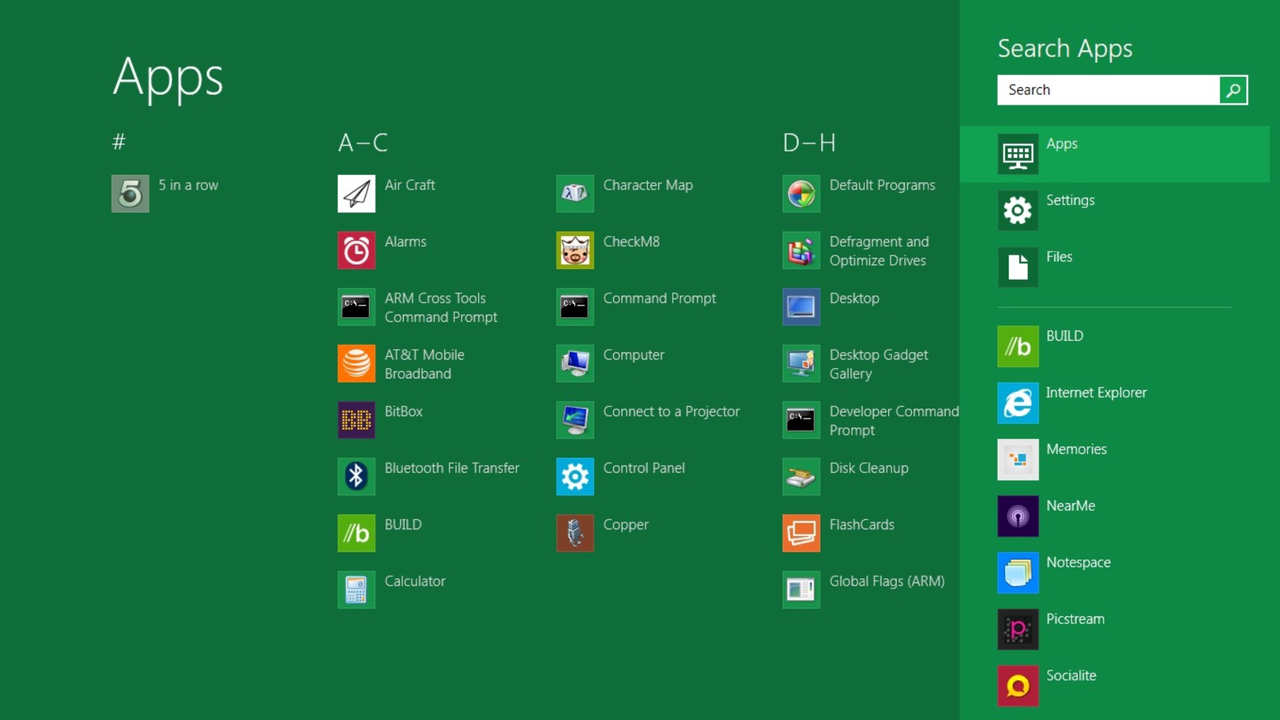
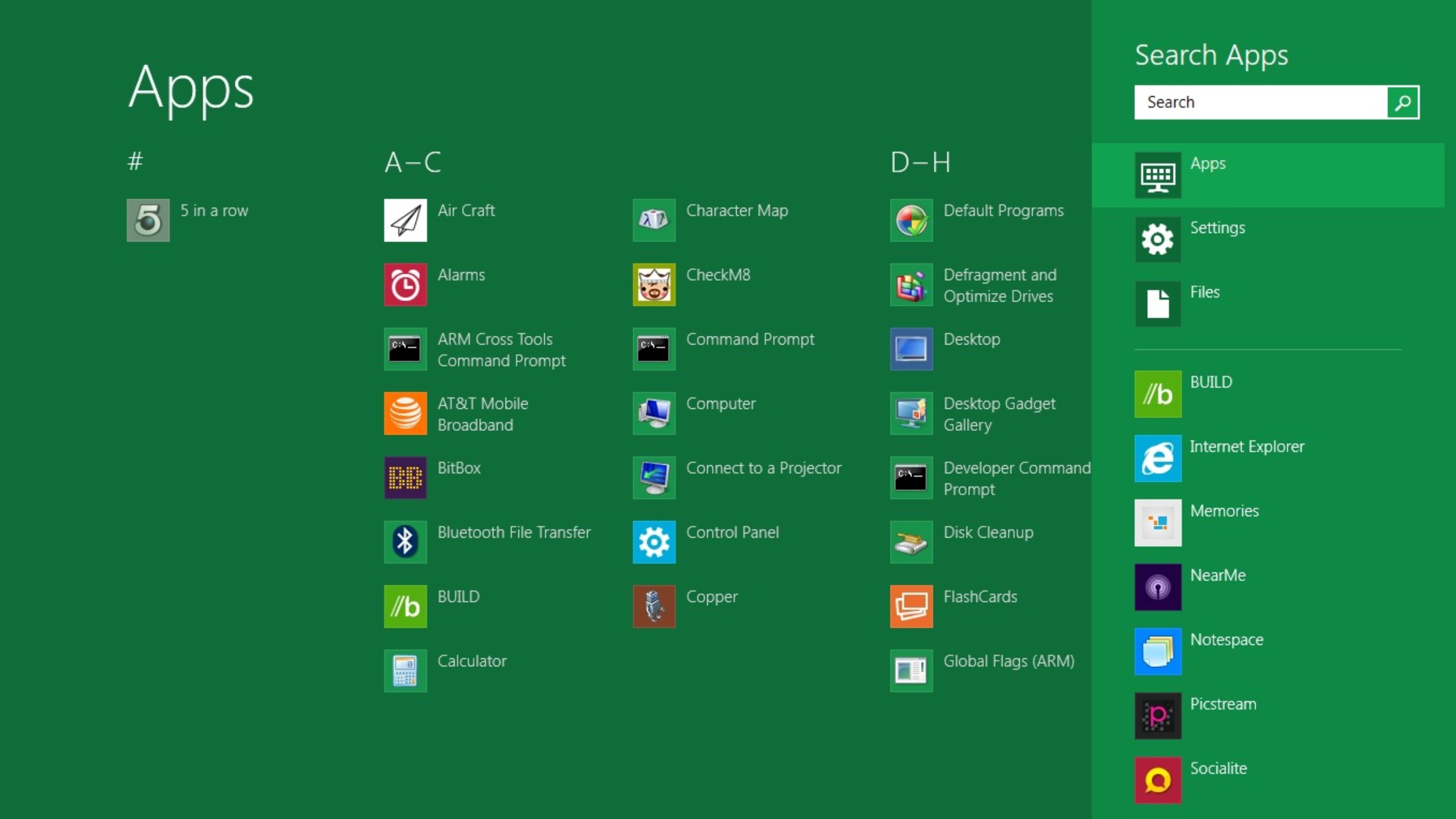
The first Build conference ran from September 13 to 16, 2011, at the Anaheim Convention Center in California. Windows 8 was effectively the entire reason the event existed. Microsoft released a developer preview of the operating system and handed every attendee a Samsung tablet preloaded with it so they could interact with the tile-based Metro interface first-hand.
Windows 8 launched to the general public in October 2012 to mixed user reception. The removal of the Start button, the push toward a touch-first design even on desktop, and the lack of app volume on Windows Store caused more strife than Microsoft had projected. Microsoft released Windows 8.1 in 2013 to address the most pressing complaints before launching Windows 10 in 2015 as a full course correction, restoring familiar design conventions while preserving the underlying technical work from the Windows 8 generation.
Cortana (Build 2014)
Microsoft first demonstrated Cortana at Build 2014 in San Francisco, introducing it as the company's answer to Apple's Siri and Google Now. Named after the AI character from the Halo series, Cortana launched on Windows Phone 8.1 shortly after and came to Windows 10 desktops in 2015, where it was integrated directly into the taskbar search bar.
For a few years, Cortana spread across Microsoft's product line, appearing on Xbox One, Microsoft Band, Android, and iOS. But it never achieved meaningful market penetration, in part because it was tied to a mobile platform that was already failing. But it was also in part because Amazon's Alexa had established the smart speaker market before Cortana could enter the fray.
By 2019, Microsoft had started pulling Cortana out of the Windows search bar. The standalone Windows app shut down in August 2023, with all remaining integrations discontinued by June 2024. Microsoft Copilot now occupies the space Cortana was originally meant to fill on Windows desktops.
HoloLens (Build 2015)
Microsoft gave developers their first hands-on time with HoloLens at Build 2015. The headset had been revealed a few months earlier as a holographic computing platform and hundreds of units were made available on the conference floor for attendees to try. Demos included one where developers used holographic panels projected onto walls to interact with a robot, and the show floor response was strong enough to give HoloLens a genuinely well-received debut.
A developer edition of HoloLens shipped in 2016 at $3,000; HoloLens 2 followed in 2019 with improved hand tracking and a wider field of view. However, Microsoft steadily narrowed its ambitions for the product, pivoting toward enterprise use cases in surgery, manufacturing, and training. Consumer development never materialized. In early 2023, reports confirmed Microsoft was winding down HoloLens hardware development entirely, with no third-generation device in the plans.
Azure Functions (Build 2016)
Azure Functions entered public preview at Build 2016 as Microsoft's entry into the serverless computing space. It let developers run event-driven code without provisioning or managing underlying infrastructure, paying only for the compute time actually consumed. Microsoft positioned it directly against AWS Lambda and Google Cloud Functions, framing it as part of a broader push to make Azure the default cloud for Microsoft developers.
The service reached general availability by the end of 2016, with continuous updates since. Azure Functions now integrates with Azure AI Foundry, letting developers build and trigger serverless AI agents, a use case that didn't exist when the product launched. The current stable runtime is version 4.x, with earlier versions progressively retired. Of everything Microsoft announced at Build 2016, Azure Functions has arguably had the longest shelf life.
Windows Subsystem for Linux (Build 2016)
WSL was announced at Build 2016 as a way to run Linux command-line tools natively on Windows, without a virtual machine or dual-boot setup. It was a direct response to developer frustration with Windows as a working environment compared to macOS and Linux, representing a shift in the company’s relationship with open-source software.
WSL 2, which replaced the original compatibility layer with a full Linux kernel running inside a Hyper-V virtual machine, was announced at Build 2019. Microsoft separated WSL from the Windows codebase in 2021 to let it ship updates independently. At Build 2025, WSL became open source, formally closing a GitHub issue that had been open since the project's very first day in 2016: "Will this be open source?"
Windows Terminal (Build 2019)
Windows Terminal was announced at Build 2019 as a modern, open-source replacement for the Windows Console. It supported multiple tabs, GPU-accelerated text rendering, and all major command-line environments (including PowerShell, Command Prompt, and WSL) in a single window. For developers who spent significant time at the command line, it was a long-overdue improvement to an area that had received very little attention for years.
The first stable release shipped at Build 2020, exactly one year after the announcement. Windows Terminal is now the default terminal in Windows 11, with regular updates through the Microsoft Store. The most recent stable release, v1.24, arrived in April 2026. A tool that started as a developer quality-of-life fix has since become a standard part of the Windows environment.
GitHub Copilot (Build 2022)
GitHub Copilot's general availability was announced at Build 2022, after nearly a year as a technical preview. Built with OpenAI and trained on public code repositories, it was the first mainstream AI coding assistant to reach general availability, offering context-aware code completion, function generation from comments, and full code block suggestions directly inside developers' existing editors.
The product picked up over 400,000 subscribers in its first month of release, according to Microsoft CEO Satya Nadella during a subsequent earnings call. By early 2024, it had grown to 1.3 million paid subscribers.
Early research suggested developers using the tool completed tasks up to 55% faster than those working without it. GitHub Copilot has since expanded from code completion into chat, code review, and pull request summaries, with a fully autonomous agent mode introduced at Build 2025 that works in the background without a developer actively typing.
Windows Copilot (Build 2023)
Build 2023 was the conference where AI moved from a background theme to the central organizing principle of every product Microsoft discussed. Windows Copilot was announced as a sidebar assistant built into Windows 11, putting a Bing AI-powered chatbot into the operating system itself, accessible from the taskbar on any compatible device. At the same event, Microsoft announced that Bing would become the default search engine for ChatGPT, signaling just how deeply the Microsoft-OpenAI partnership had become embedded in Microsoft's product strategy.
Windows Copilot has since evolved significantly. The original branding was retired in late 2023 as Microsoft unified its various assistant products under the Microsoft Copilot name. The assistant is now available across Windows, Microsoft Edge, and Microsoft 365, with capabilities well beyond what the Build 2023 preview showed.
Copilot+ PCs (Build 2024)
The day before Build 2024 opened, Microsoft announced Copilot+ PCs: a new hardware category defined by the presence of a dedicated neural processing unit capable of at least 40 TOPS (trillion operations per second) of on-device AI performance. The Surface Pro and Surface Laptop were the first devices to carry the designation. Microsoft framed it as the beginning of a new era of AI-capable personal computing, distinct from standard Windows devices specifically because of the on-device AI tasks the NPU enables.
The category has since expanded to include devices from Qualcomm, AMD, and Intel, with dozens of Copilot+ PC models from multiple manufacturers now on the market. AI features specific to the category include real-time captioning and on-device image generation. Recall — a searchable record of everything you have done on your PC — drew significant criticism over privacy concerns at launch and was delayed before returning under more restrictive settings.
GitHub Copilot for autonomous coding (Build 2025)
At Build 2025, Microsoft announced that GitHub Copilot was making the shift from coding assistant to autonomous agent. The new agent mode lets Copilot perform complete coding tasks independently: creating files, running tests, fixing bugs, and pushing changes to a draft pull request, all without the developer actively engaged.
At the same time, GitHub CEO Thomas Dohmke emphasized that every action is logged transparently so developers can review the work after the fact and existing security rules such as branch protection remain fully in force.
Satya Nadella compared the move to other inflection points in Microsoft's history, including the transition to 64-bit Windows and the company's pivot to the cloud. Whether that framing proves accurate depends on how quickly agent-mode coding becomes standard practice, but the announcement does represent the most substantial extension of GitHub Copilot's scope since the product launched in 2022.
What to expect from Microsoft Build 2026?
Build 2026 runs on June 2 and 3 at Fort Mason Center in San Francisco, marking the first time the conference has left Seattle since 2016. In-person tickets cost $1,099 and capacity is capped at roughly 2,500 developers, making it a more compact event than recent editions.
Keynotes and select sessions stream for free by clicking here. On-demand sessions will be available afterward for anyone unable to attend or watch live.
Satya Nadella is confirmed for the opening keynote, which Microsoft has described as being about "creating new opportunity for developers across our platforms in this era of AI."
The session catalog published in April points toward four main themes: developer tools and frameworks, cloud platform and data, model training, and agents and apps. Given the trajectory set at Build 2025, further announcements around GitHub Copilot's autonomous capabilities and Azure AI Foundry integration seem likely.
Beyond agents, Build 2026 is expected to address Windows AI tooling, MCP (Model Context Protocol) integration across Microsoft's developer platform, and updates to the Copilot+ PC category.
What gets announced will probably surprise even close watchers, which is, historically, exactly the point of the event.

Ritoban Mukherjee is a tech and innovations journalist from West Bengal, India. These days, most of his work revolves around B2B software, such as AI website builders, VoIP platforms, and CRMs, among other things. He has also been published on Tom's Guide, Creative Bloq, IT Pro, Gizmodo, Quartz, and Mental Floss.
You must confirm your public display name before commenting
Please logout and then login again, you will then be prompted to enter your display name.