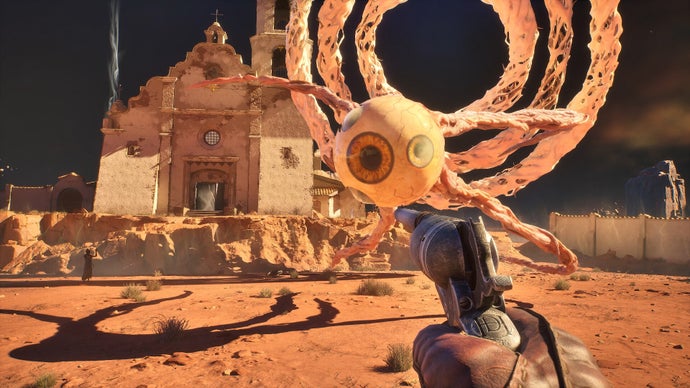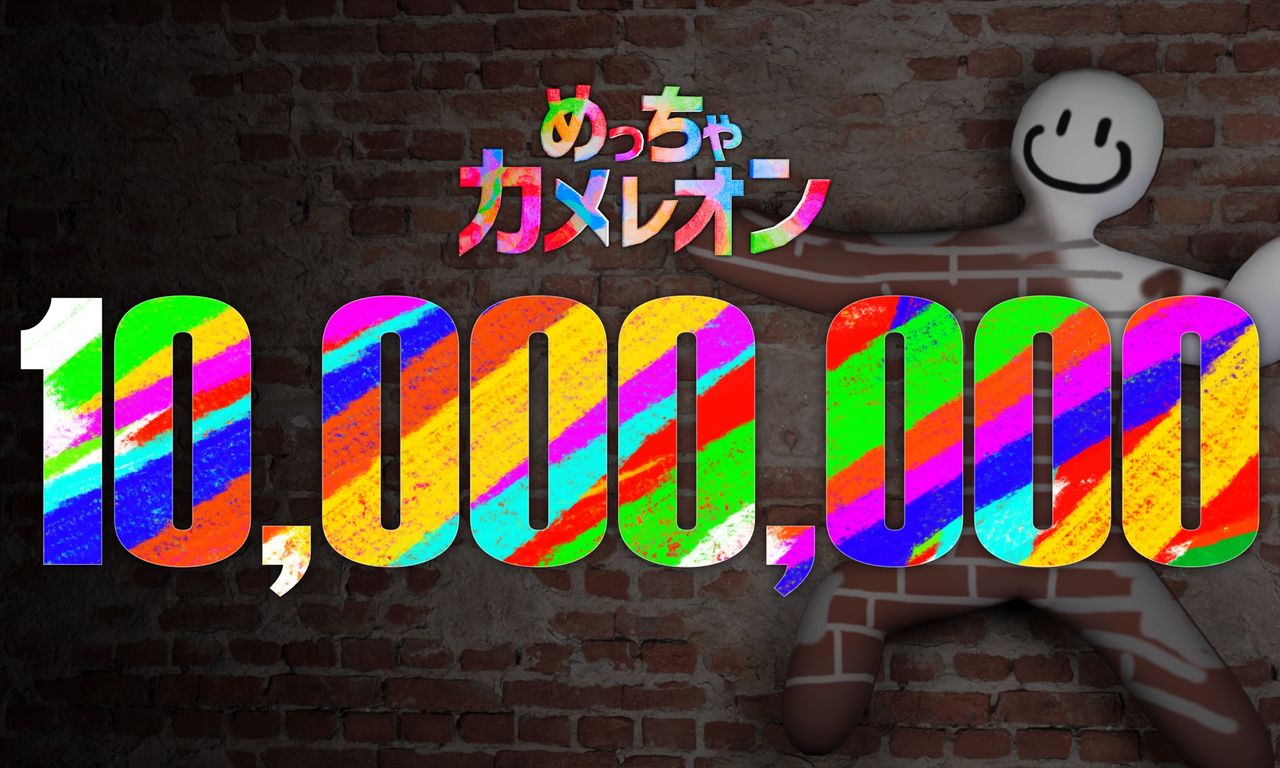
Meccha Chameleon has become one of 2026’s biggest indie success stories, selling more than 10 million copies in the three weeks since its June 9 launch — a staggering haul for a hide-and-seek game built by just two Japanese developers in roughly two months. Do the math and the numbers become almost comical: at a $5.99 base price, that’s somewhere in the region of $60 million in gross revenue before Steam’s cut and taxes.
Just how much money is that?
The developers, Lemorion and Haganeiro, told Japanese outlet GameWith they spent nothing on promotion, so up-front marketing costs were effectively zero. Actual revenue lands a bit under the headline $60 million figure: the game launched with a first-week discount that dropped the price to $4.79, and a large share of sales came from outside the US — including its native Japan, where the price often works out to less than $6 per copy.
Even so, the totals are enormous. Of the 36,810 Steam reviews logged so far, 20,712 are in English, showing just how strongly the game landed in Western markets. Because daily review volume only spiked after the first week, more sales likely came at full price than at the launch discount. If you follow the breakout hits in PC gaming, this is a textbook viral phenomenon.
The secret behind the two-month build
According to the GameWith interview, the pair’s method was disarmingly simple: build a barebones, complete-but-rough version first, then iterate. “We found that creating the entire thing first allows us to hit the finish line more efficiently, and the reassurance that ‘at worst, we can still release this as is’ to be a great motivator,” they said, in a translation by Automaton.
That “make it exist first, perfect it later” philosophy is more principle than trick. The real accelerant was heavy asset reuse from their earlier projects, which themselves took two to three months to develop. In effect, the two-month sprint stood on the shoulders of prior work rather than starting from a blank canvas.
A $1 million-per-workday rate
Here’s where the figures get surreal. Meccha Chameleon has likely already crossed the $50 million threshold at which Valve’s revenue share drops from 30% to 20%. Factoring in the strong dollar-to-yen exchange rate, the two creators have earned life-changing money for a very short stretch of work. If continuing sales since June 25 stayed strong, their retroactive day rate works out to roughly $1 million per day across the full dev cycle — about $1,667 an hour, assuming a 10-hour day with no days off for two months.
Why it matters
The story fits a broader 2026 pattern of lightning-fast projects earning outsized returns. The horror film Obsession, shot in 26 days on a $750,000 budget, has grossed $371 million — though that windfall is split among far more than two people. Meccha Chameleon’s appeal isn’t just financial, either. PC Gamer’s 82% review praised it as “a multiplayer experience that exceeds its friendslop trappings,” meaning the game of competitive camouflage is genuinely good, not just a viral fluke.
For solo and small-team creators, the takeaway is potent: a tight scope, reused assets, and a ship-it-early mindset can occasionally produce a runaway hit that outperforms far larger studio releases. Anyone tracking indie game trends will find plenty to study here.
Frequently asked questions
How many copies has Meccha Chameleon sold?
More than 10 million copies as of June 25, roughly three weeks after its June 9 launch, with sales continuing to climb.
How long did Meccha Chameleon take to make?
About two months, built by two developers who reused assets from earlier projects that had each taken two to three months to develop.
How much money did the developers make?
Estimates put gross revenue near $60 million before Steam’s cut and taxes, translating to an effective rate of roughly $1 million per workday across the game’s development.